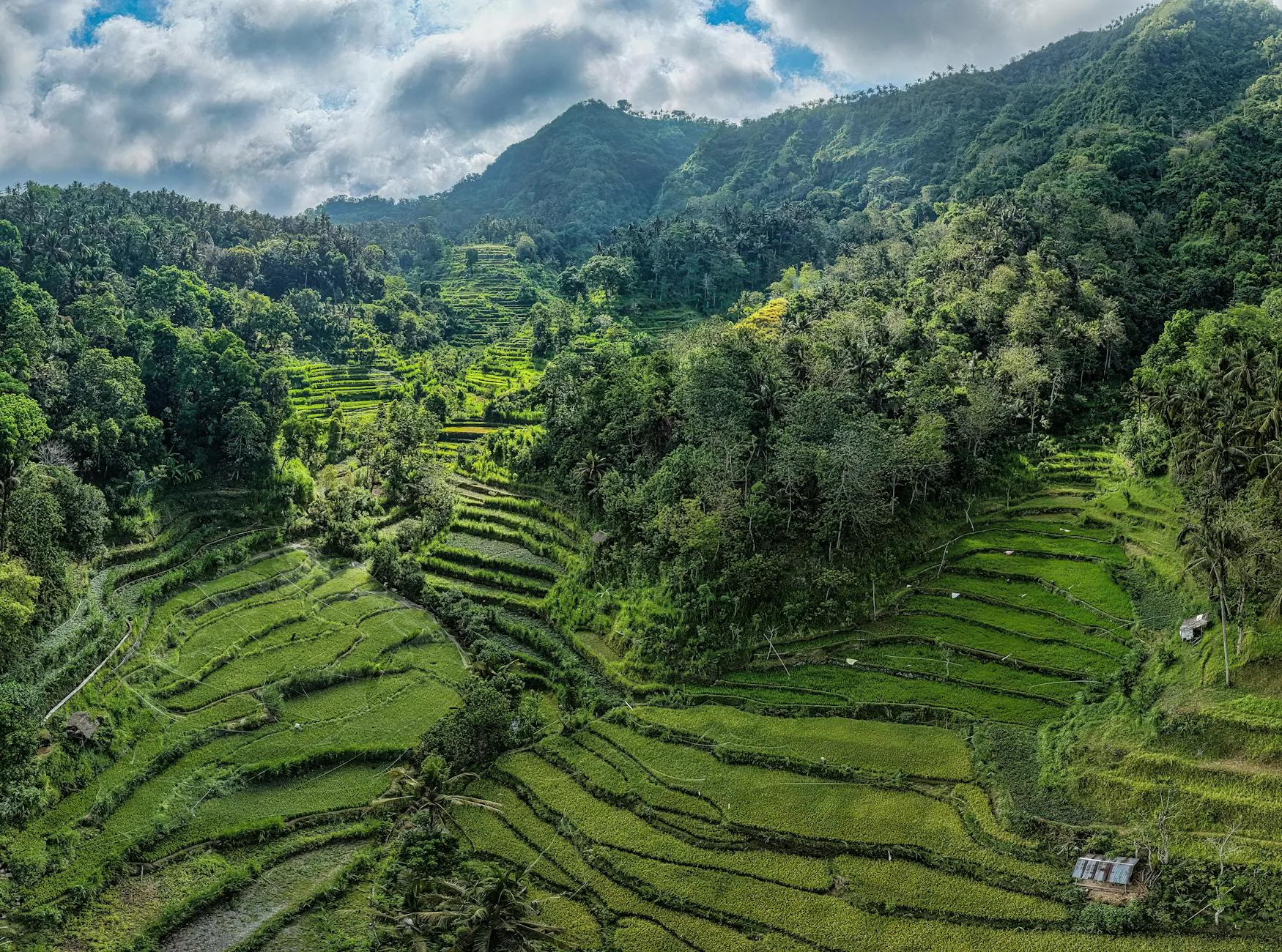
Terraced rice fields of Ubud, Bali, Indonesia

Moving to Bali

Digital nomad paradise, one of the lowest costs of living in Asia, breathtaking tropical nature

Read the guide
Southeast AsiaRupiah (IDR)Second Home VisaNomad lifestyleCanggu-60% vs Paris

Factsheet: Bali

Bali is an Indonesian island of 4.3 million inhabitants, world-renowned for its terraced rice fields, Hindu temples, beaches, and surfing. But since the 2010s, it has become the global capital of digital nomads: a community estimated at over 80,000 expatriates and remote workers, attracted by rock-bottom rents, an unbeatable cost of living, and an incomparable tropical lifestyle. For anyone seeking adventure, freedom, and sunshine, Bali represents a unique opportunity, provided you understand its administrative complexities and practical limitations.

๐Ÿ‡ฎ๐Ÿ‡ฉ
Bali
Digital nomad paradise, one of the lowest costs of living in Asia, breathtaking tropical nature
Capital
Denpasar
Official language
Indonesian + Balinese (English in expat areas)
Currency
Indonesian Rupiah (IDR)
Population
~4.3 million inhabitants
Timezone
UTC+8 (WITA)
๐Ÿ‡ช๐Ÿ‡บ European Union
No (outside EU)
Digital nomad visa
Second Home Visa 5 years (deposit ~$130,000)
Cost of living (vs Paris)
~55 to 60% cheaper

Why choose Bali?

Bali combines rare assets: an ultra-competitive cost of living, spectacular tropical nature, a massive international community, and a unique creative energy. This cocktail attracts thousands of people every year (freelancers, creators, entrepreneurs, families) seeking a better life without sacrificing their comfort level. Here are the six main reasons Bali deserves your attention.

๐Ÿ’ฐ
Ultra-low cost of living
Live comfortably for 1,200 to 2,000 EUR/month, with a private pool villa, scooter, restaurants, and activities. A Parisian budget affords a lifestyle three times better.
๐ŸŒฟ
Exceptional nature
Terraced rice fields, volcanoes, surf beaches, waterfalls, and lush jungle. One of the most beautiful natural environments in Asia, accessible within minutes by scooter.
๐ŸŒ
Huge expat community
Over 80,000 expatriates and digital nomads. Near-daily networking events, dozens of coworking spaces, a hyperactive social scene in Canggu and Ubud.
โ˜€๏ธ
Tropical weather year-round
Temperatures between 26 and 32C all year. Dry season from April to October is ideal. Sunshine, pools, and the ocean are part of daily life, not just vacations.
๐Ÿฅ—
Healthy and diverse gastronomy
Delicious and healthy Balinese cuisine, smoothie and healthy food culture, tropical fruit markets, vegetarian and raw food restaurants among the best in the world.
๐Ÿ„
Freedom and nomad lifestyle
Yoga in the morning, coworking in the afternoon, surfing at sunset. Bali invented the digital nomad lifestyle before the term even existed, and keeps perfecting it every year.

Visa & Residence

Indonesia is known for the complexity of its immigration rules, which change regularly. No stable digital nomad visa exists yet, but several options allow legal stays on the island ranging from 30 days to 5 years. The choice depends on your budget, desired length of stay, and professional activities.

VOA, Visa on Arrival (30 days)

The Visa on Arrival allows a 30-day stay in Indonesia, renewable once (60 days total). It is obtained directly at the airport. Ideal for a first test stay or a short tourist visit.

Duration
30 days, renewable once (60 days total)
Min. income
N/A
Timeline
Immediate at the airport
Target
35 USD at the airport

B211A Visa, Social/Cultural Visa (~6 months)

The B211A visa is the favorite option for nomads who want to stay 5 to 6 months in Bali. It is obtained through a local agent (sponsor), allows 4 renewals of 30 days each beyond the initial 60 days. The process is simple but must go through an accredited agent.

Duration
60 days + 4 renewals โ†’ ~6 months
Min. income
N/A
Timeline
A few days via agent
Target
~300-500 EUR via agent (all-inclusive)

Second Home Visa (5 years)

Launched in 2022, the Second Home Visa targets affluent expatriates looking to settle permanently in Indonesia. It requires a deposit or investment proving assets of at least 2 billion IDR (~$130,000), but offers unmatched administrative stability in return: 5 years renewable, option to bring family.

Duration
5 years, renewable
Min. income
Deposit 2 billion IDR (~$130,000)
Timeline
Variable
Target
Variable
Duration 5 years - Deposit 2 billion IDR (~$130,000) - Family included. Ideal for expatriates with high income or real estate assets. Allows you to live legally in Bali without the stress of semi-annual renewals.

KITAS, Temporary Stay Permit 1-2 years

The KITAS (Kartu Izin Tinggal Terbatas) is Indonesia's temporary residence permit. It requires a sponsor, either a local employer or an investor through a PT PMA company. Note: with a work KITAS, you become in principle liable for tax on your worldwide income in Indonesia.

Digital nomad visa in development: Indonesia has announced a digital nomad visa on several occasions, still awaiting concrete implementation in 2026. Monitor announcements from the Indonesian Immigration Ministry before your departure.

Cost of living

Bali is one of the most affordable destinations in the world for a Western-quality standard of living. The gap is estimated at 55 to 60% cheaper than Paris overall. A monthly budget of 1,500 EUR allows you to rent a villa with a private pool, eat healthily, have a scooter and fiber connection, and fully enjoy the island. This is a decisive advantage for nomads and freelancers paid in euros or dollars.

Estimated monthly budget: 1,200 - 2,000 EUR/month

Expense Monthly amount
Rent, studio Canggu 350 โ€“ 550 EUR
2-bedroom villa with pool 800 โ€“ 1,400 EUR
Warung meal (local cuisine) 1 โ€“ 3 EUR
Western restaurant 10 โ€“ 20 EUR
Scooter rental 50 โ€“ 80 EUR
Fiber internet / SIM data 20 โ€“ 40 EUR
International health insurance 60 โ€“ 120 EUR

๐Ÿ“Š Taxation

Indonesian taxation for foreigners is one of the most favorable in Southeast Asia, provided you understand the rules. The key element: without an active work KITAS, a foreign digital nomad is only taxed on Indonesian-source income, and since they generally have none, they are in practice not taxed in Indonesia. The France-Indonesia tax treaty of 1979 avoids double taxation.

Income tax
5-35% on local income only for foreigners without a long-term KITAS
Corporate tax (PT PMA)
22%, standard corporate tax rate for foreign-owned companies
Withholding tax on dividends
10%, withholding tax applicable to dividend distributions
France-Indonesia tax treaty (1979)
Double taxation avoided, income taxed in the country of residence
Common situation for nomads
Without a work KITAS: remains a tax resident of France (or other home country), not taxed in Indonesia on foreign income. Legal as long as properly documented.

๐Ÿš€ For entrepreneurs

The entrepreneurial reality in Bali is more complex than it appears. Setting up a local structure (PT PMA) is legally possible for foreigners, but involves a high minimum capital, lengthy formalities, and a mandatory local partnership requirement in many sectors. The solution adopted by the vast majority of expatriate nomads and entrepreneurs is to remain freelancers through a foreign entity (Estonian, Georgian, British, or French) and work from Bali with a renewed B211A visa.

PT PMA, Foreign Company
Legal structure for foreigners. High minimum capital, restricted sectors, complex formalities with notary and BKPM. Not recommended unless you have significant local physical activity.
Virtual Office + Local Agent
Intermediate solution: domiciliation address, local secretarial service, liaison agent for visa formalities. Cost: 50-200 EUR/month.
Foreign company (Estonia, Georgia...)
The favorite solution for nomads: set up an Estonian OU or a Georgian LLC, invoice clients through this structure, and live in Bali on a B211A visa. Simple, legal, and highly tax-efficient.
Administrative complexity
Indonesia is not a country of administrative ease. Rules change frequently, agents are essential, and bureaucracy can be discouraging. Allow time and expect surprises if you plan to set up a local structure.

โค๏ธ Healthcare

Healthcare is the main point of vigilance for any expatriate in Bali. Routine care (minor injuries, infections, simple fractures, stitches) is well handled in international private clinics. However, for complex surgeries, serious illnesses, or life-threatening emergencies, medical evacuation to Singapore (about 1.5 hours by air) is often the only truly reliable option. This is why international health insurance with repatriation coverage is absolutely essential.

BIMC Hospital
The expat reference in Kuta and Nusa Dua. English-speaking staff, 24/7 emergency room, partner of major international insurance providers.
Siloam Hospitals
Premium Indonesian hospital chain. Present in Denpasar and Legian. Good general care, foreign-trained doctors.
Prima Medika
Central hospital in Denpasar. High Indonesian standard, used by locals and long-term expat residents. More affordable rates.
Evacuation to Singapore
For any major surgery, serious accident, or severe illness: medical evacuation to Singapore (~1.5 hours by air). Your insurance must cover international repatriation without a cap.

Where to live

Bali is an island of many faces. Each area offers a radically different atmosphere and lifestyle, and your choice of neighborhood will shape your entire experience. Most expats choose their base according to their priorities: surf and networking in Canggu, calm and culture in Ubud, luxury living in Seminyak, or family-friendly tranquility in Sanur.
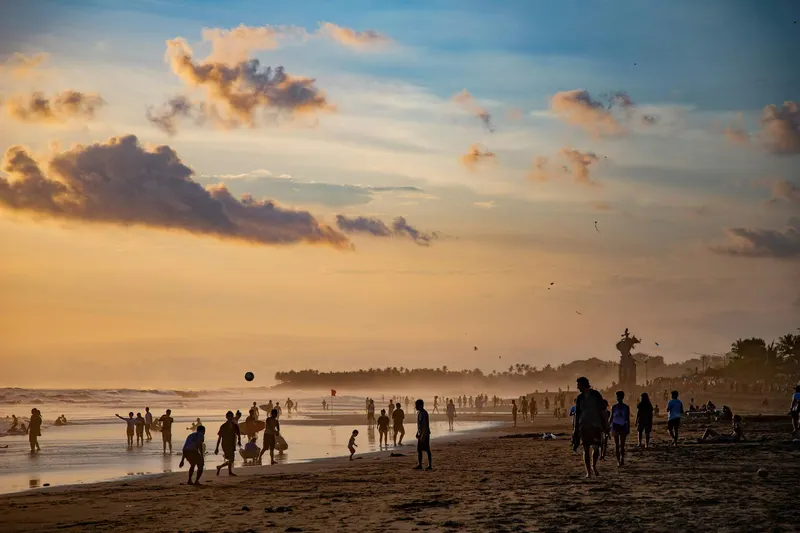

Canggu
Canggu
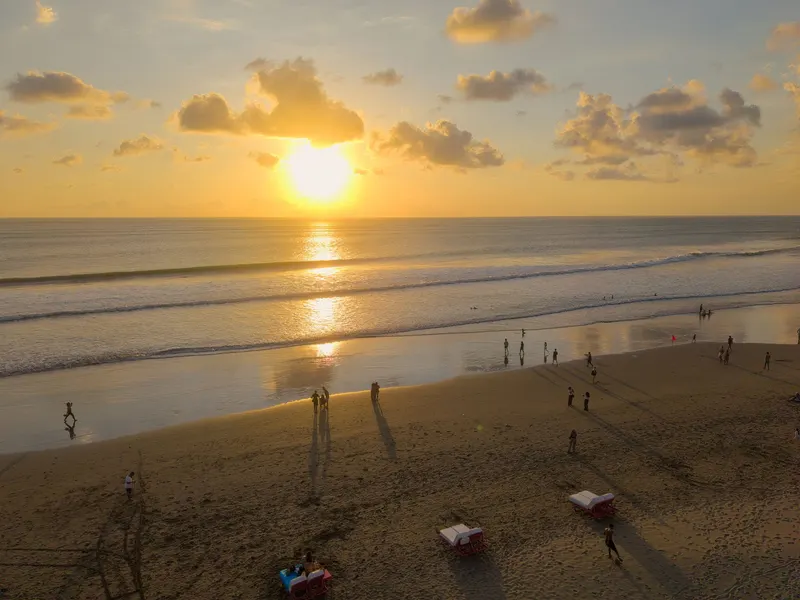
Epicenter of the global nomad scene. Coworking spaces, beach clubs, Instagram cafes, surf breaks. Very lively, sometimes overly touristy. Rent 400-900 EUR/month.
Best for: Digital nomads, surfers
Ubud
Ubud
Rice fields, temples, yoga studios, art galleries. The cultural town par excellence, far from the noise and surf. Ideal for creatives and introverts. Rent 300-600 EUR/month.
Best for: Creatives, introverts, yogis
Seminyak
Seminyak
Upscale restaurants, boutiques, renowned beach clubs. More sophisticated than Canggu. Ideal for those wanting a rich social life. Rent 600-1,200 EUR/month.
Best for: Lifestyle, social life
Sanur
Sanur
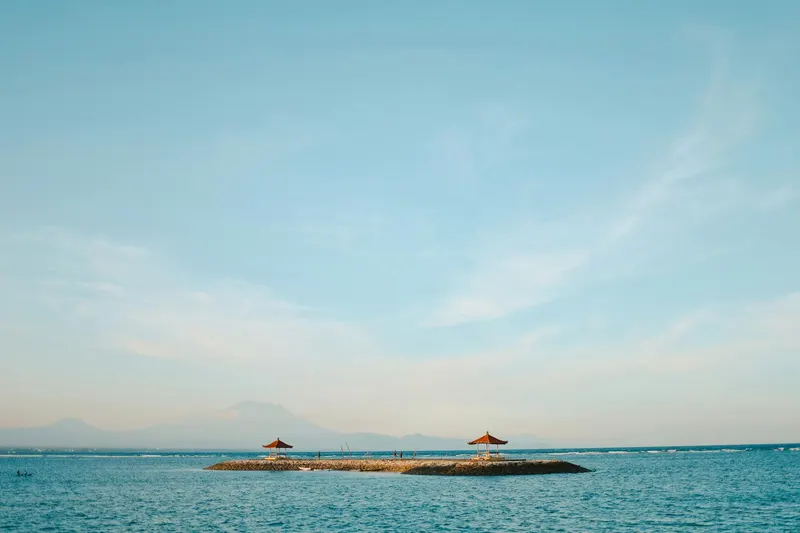
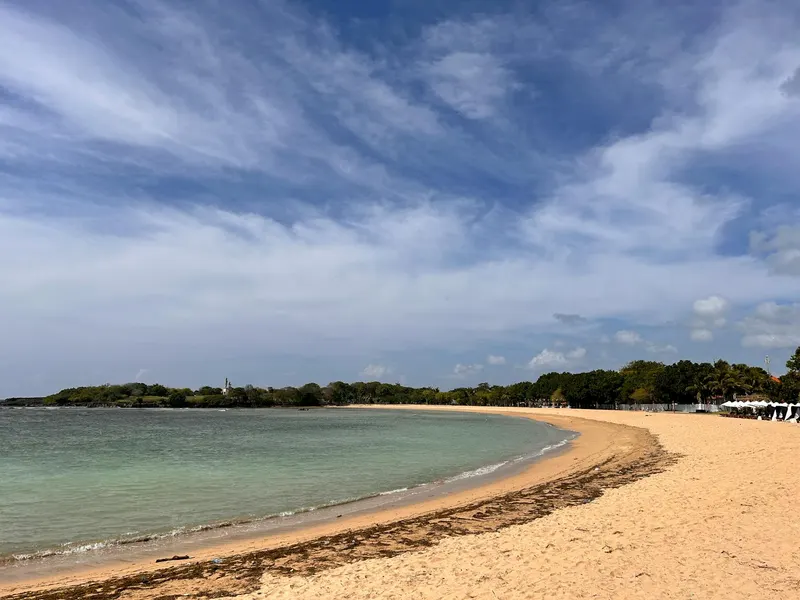
Quiet seaside, relaxed atmosphere, community of established expats and families. Good connectivity, less traffic. Ideal for long-term settling. Rent 400-700 EUR/month.
Best for: Families, established expats
Nusa Dua
Nusa Dua
Premium hotel zone, isolated from the rest of the island. Secure, few locals, international clientele. High rents but maximum quality of life. 800-1,500 EUR/month.
Best for: Luxury, maximum quality of life

Drawbacks to know

๐ŸŒ‹
Serious natural hazard risks
Mount Agung is active. Bali sits on the Ring of Fire: earthquakes, eruptions, and tsunami risks are part of local reality. Be informed about evacuation procedures.
๐Ÿ›ต
Catastrophic traffic
Canggu and Seminyak are regularly paralyzed by traffic jams, especially in high season. Scooter riding is dangerous and accidents involving tourists are very common.
๐Ÿ“‹
Complex and unstable visa situation
No stable digital nomad visa in 2026. Rules change, renewals are cumbersome, and a misstep can lead to overstay with fines or deportation. Stay informed about regulatory changes.
๐Ÿฅ
Limited local healthcare
For any serious case, evacuation to Singapore is necessary. Without repatriation insurance, a serious accident can cost tens of thousands of euros. There is no social security accessible to foreigners.
๐ŸŒง๏ธ
Difficult rainy season
From November to March, stifling humid heat, torrential rains, flooding in low-lying areas, and increased mosquitoes. The island is less pleasant and power and internet outages are more frequent.
โš–๏ธ
Very strict local laws
Indonesian legislation is extremely harsh on drugs: possession can lead to life imprisonment or even the death penalty. Scrupulously respect local laws and Balinese religious customs.

Frequently asked questions

How much does it cost to live in Bali for an expatriate? +
A digital nomad can live very comfortably in Bali for 1,200 to 2,000 EUR/month all-inclusive. For this budget, you will have a 2-bedroom villa with a private pool, a scooter, varied meals (warungs and Western restaurants), health insurance, and the ability to regularly practice yoga, surf, and other activities. The same budget in Paris would only cover a studio apartment on the outskirts and few extras.
Which visa should you choose to settle in Bali? +
For a first discovery stay (30-60 days): the VOA (Visa on Arrival) at 35 USD is sufficient. For a 3 to 6-month stay: the B211A visa through a local agent is the most commonly used solution (300-500 EUR all-inclusive). For a long-term settlement (5 years) with a substantial budget: the Second Home Visa (deposit ~$130,000). Avoid overstaying, as fines and entry bans are real.
Can you legally work in Bali as a remote worker? +
The nuanced answer: physically working for an Indonesian employer requires a work visa (KITAS). However, working remotely for clients or an employer outside Indonesia from Bali is in practice tolerated by the authorities, even though the legal framework remains unclear. The vast majority of digital nomads in Bali operate in this legal gray area, on a B211A visa. The official digital nomad visa announced by the Indonesian government is not yet operational in 2026.
Is safety a concern in Bali? +
Bali is generally safe for Western expatriates. Violent crime is rare. The main risks are petty theft (especially from scooters), common tourist scams, and road accidents (very frequent). The natural risk (earthquakes, volcanic eruptions) is real and documented. Local drug laws are of absolute severity: take no risks on this point.
Which health insurance to choose for Bali? +
International health insurance with medical repatriation is absolutely essential in Bali. Recommended solutions include: AXA Global Healthcare (solid Asian coverage), Cigna Global (premium), and SafetyWing (more affordable, ideal for nomads). Your insurance must imperatively cover medical evacuation to Singapore without a cap, as complex treatments are performed there. Budget: 60 to 120 EUR/month depending on age and chosen options.

Explore other destinations

Compare with other countries that might suit you.