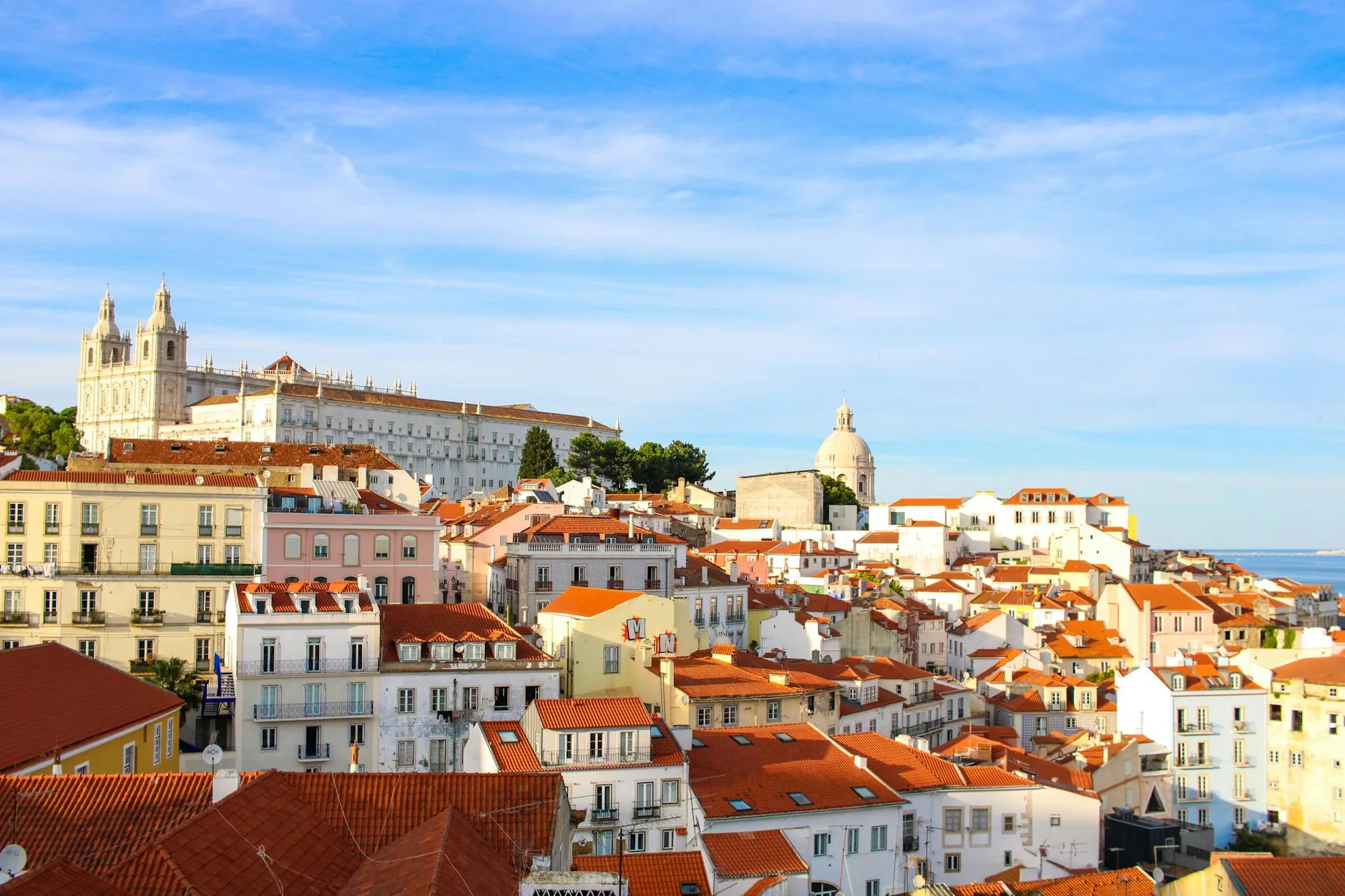
View of Lisbon, capital of Portugal

Moving to Portugal

Europe's sunshine, 2h from Paris

Read the guide
European UnionEuro300 days of sunshineD7/D8 VisaLisbon-30/40% vs Paris

Factsheet: Portugal

Portugal is a Western European country of 10.5 million people, an EU member since 1986 and part of the Eurozone since 1999. Blessed with Atlantic coastlines, renowned gastronomy and a warm way of life, it now hosts one of the largest expat communities in Europe. Between the IFICI tax regime (successor to the NHR), D7 and D8 visas for remote workers and retirees, and an unmatched quality of life, Portugal stands as a top-tier destination for anyone looking to relocate to Europe.

🇵🇹
Portugal
Europe's sunshine, 2h from Paris
Capital
Lisbon
Official language
Portuguese (English widely spoken in major cities)
Currency
Euro (€)
Population
~10.5 million
Timezone
UTC+0 (UTC+1 in summer)
🇪🇺 European Union
Yes, since 1986
Digital nomad visa
D8 visa, 1 year renewable
Cost of living (vs Paris)
~30 to 40% cheaper

Why choose Portugal?

Portugal combines rare advantages in Europe: EU membership, exceptional sunshine, gastronomy, Atlantic lifestyle, attractive tax regime and a massive international community that makes settling in easier. Here are the six main reasons thousands of expats choose Portugal every year.

🌍
EU free movement
No visa required for EU citizens. Full European legal protection, social rights, access to the single market and Schengen area without additional paperwork.
☀️
Sun, sea and quality of life
300 days of sunshine per year, 800 km of Atlantic coastline, renowned gastronomy (pasteis, bacalhau, wines), warm culture and a relaxed pace of life.
📊
IFICI regime — 20% flat tax for 10 years
For eligible categories (tech, R&D, arts, education...), 20% income tax for 10 years. A significant tax advantage for qualified professionals.
✈️
Close to major European cities
Lisbon is 2h from Paris by plane, with only a 1-hour time difference in summer (0h in winter). Easy and affordable trips back home.
🇬🇧
Large international community
Huge expat community in Portugal. International schools, associations and active networks in Lisbon and Porto make integration smooth.
🔒
Top 5 safest country worldwide (GPI)
Portugal consistently ranks among the five safest countries in the world according to the Global Peace Index. Very low crime rate, welcoming culture.

Visa & Residence

Portugal offers several pathways depending on your profile. EU citizens benefit from free movement and don't need a visa to settle. For non-EU nationals or those wanting a formalized status, several specific visas have been created in recent years.

EU free movement

As an EU citizen, no visa is required. After 3 months, register at the local Junta de Freguesia for a residence certificate. The NIF (tax identification number) is the first document to obtain — mandatory for opening a bank account, signing a lease or subscribing to services.

D7 visa — passive income & retirees

The D7 visa targets individuals with stable passive income: pensions, rental income, dividends, investment returns. Apply at the Portuguese consulate in your home country. Initial visa valid for 4 months, then converted to a 2-year residence card, renewable for 3 years, then permanent residence.

Duration
2-year residence card then 5 years
Min. income
≥ €1,020/month
Timeline
4 to 8 weeks (consulate)
Target
Retirees, passive income holders

D8 visa — digital nomads

Created in 2022, the D8 visa targets remote workers employed by or contracting for companies outside Portugal. Minimum income required: €3,040/month. Same procedure as D7 via the consulate. Valid for 1 year, then renewable for 2 years. Note: AIMA (formerly SEF) processing times can be 6 to 12 months for your first residence card.

Duration
1 year then 2 years renewable
Min. income
≥ €3,040/month
Timeline
4-8 weeks consulate + AIMA
Target
Freelancers, remote workers, consultants

Cost of living

Portugal remains 30 to 40% cheaper than Paris overall, but Lisbon has seen a dramatic price increase since 2018, especially in housing (+60% in five years in some neighborhoods). Outside of housing, food, dining out and transport remain very affordable. Porto and regional areas offer much better value than the capital.

Estimated monthly budget: €1,800–2,800/month (Lisbon) · €1,400–2,100/month (Porto)

Expense Monthly amount
1-bed apartment city center (Lisbon) €1,100–1,600
1-bed apartment city center (Porto) €750–1,100
Groceries €250–400
Dining out €150–300
Transport (monthly pass Lisbon) €40
Fiber internet €25–35
Private health insurance €40–100

📊 Taxation

Portugal was long celebrated for its NHR (Non-Habitual Resident) regime. Since January 2024, this has been replaced by IFICI (Incentivo Fiscal à Investigação Científica e Inovação), more targeted and restrictive. The France-Portugal tax treaty (1971, revised 2016) prevents double taxation.

IFICI — 20% flat tax for 10 years
For employment income in eligible categories: technology & R&D, artistic & cultural activities, higher education, fund management & investment. Condition: must not have been a Portuguese tax resident in the last 5 years.
Standard income tax: 14.5 to 53%
Progressive rates apply if not eligible for IFICI. Dividends and capital gains taxed at 28% (flat rate or integration into the progressive scale at the taxpayer's option).
Corporate tax: 21% (17% for SMEs)
SMEs benefit from a reduced 17% rate on the first €50,000 of taxable profit, then 21% above that threshold.
France-Portugal tax treaty (1971, revised 2016)
Double taxation avoided. Dividends and capital gains: 28% flat. AIMI (additional property tax on net real estate above €600,000) ranges from 0.7 to 1.5%.
Warning: IFICI is more restrictive than the old NHR
Foreign pensions are no longer exempt. Many expats who planned their move under the NHR regime have been disappointed. Always verify your eligibility with a specialized tax advisor before making any decision.

🚀 For entrepreneurs

Portugal has established itself as a leading European tech and startup hub, notably thanks to the Web Summit held annually in Lisbon. The ecosystem is active, European talent is accessible, and legal structures are simple to set up.

Create a Lda in 1 day
The Lda (Sociedade por Quotas) is the Portuguese equivalent of a limited company. Symbolic minimum capital of €1, creation via the Empresa na Hora system in one day. Simple formalities, accessible accounting.
17% corporate tax for SMEs
SMEs benefit from a 17% reduced rate on the first €50,000 of taxable profit (21% above). A real advantage over many Western European countries for growing small businesses.
Web Summit and tech ecosystem
Lisbon hosts the Web Summit, one of the world's largest tech conferences. Startup Portugal, the national acceleration program, and numerous incubators (UPTEC, Startup Lisboa) energize the local ecosystem.
Access to European talent
Lower labor costs than Western Europe, strong presence of international tech profiles, numerous coworking spaces (Second Home, Heden, Fabrica de Startups) in major cities.

❤️ Healthcare

Portugal's public healthcare system, the SNS (Sistema Nacional de Saude), is free for residents with a utente number (patient ID). It covers consultations, emergencies, hospitalizations and reduced-price medications. Wait times in the public sector can be long. Private clinics are of very good quality.

Hospital da Luz and CUF Hospitals
Top private healthcare references in Lisbon. CUF is a nationwide network of private clinics with excellent care standards and fast consultations at prices well below those in France or the UK.
Medications 30 to 50% cheaper
Medications are significantly cheaper than in France or the UK. The SNS also provides affordable dental care in the public sector.
Private health insurance
MEDIS and Fidelidade HealthClub offer comprehensive plans from €40–80/month. For expats not yet covered by the SNS, international insurance (Cigna, AXA Expatriate) is essential upon arrival.

Where to live

Portugal offers very different vibes depending on the region. Lisbon concentrates professional opportunities and international life. Porto charms with its authenticity and affordability. The Algarve attracts families and retirees for its sunshine. Alentejo offers peace and vineyards. Madeira draws a growing digital nomad community.

Lisbon
Lisbon
Tech hub, Web Summit, nightlife, gastronomy. Very international. Tight rental market. Budget: €1,800–2,800/month.
Best for: The vibrant capital
Porto
Porto
2nd city, dynamic, cheaper than Lisbon. Strong cultural scene, gastronomy, Douro valley nearby. Budget: €1,400–2,100/month.
Best for: The authentic city
Algarve
Algarve
Beaches, golf, international retirees. Lagos, Tavira, Faro. Ideal for families and retirees. Budget: €1,500–2,200/month.
Best for: The sunny south
Alentejo
Alentejo
Nature, vineyards, Evora UNESCO site. Very quiet, low cost, ideal for remote work. Budget: €1,200–1,800/month.
Best for: Peace and vineyards
Madeira
Madeira
Funchal booming, strong digital nomad hub, -20% vs Lisbon on rent. Spectacular nature. Budget: €1,300–1,900/month.
Best for: The nomad island

Drawbacks to know

🏠
Very tight housing market
Lisbon rents have increased 60% in five years. The market is competitive, and finding an apartment in the city center requires planning ahead and networking.
📊
IFICI is more restrictive than the old NHR
The new IFICI regime is much more targeted than the former NHR. Foreign pensions, rental income and income outside eligible categories no longer benefit from exemption. Many expats have been disappointed.
🐌
AIMA — slow bureaucracy
The transition from SEF to AIMA has created significant delays. Getting your first residence card can take 6 to 12 months. Patience is essential for administrative procedures.
🗣️
Portuguese is essential
Contrary to popular belief, spoken Portuguese is very different from Spanish. True integration requires learning the language. Outside major cities and tourist areas, English is not widely spoken.
💼
Very low local salaries
Portugal's minimum wage is €1,020/month in 2024, one of the lowest in Western Europe. If you're looking for a local job (outside remote/international tech), expect a significant pay cut.
🌡️
Intense summer heat in the south
The Alentejo and south-central regions regularly see temperatures above 40°C in July-August. Wildfires are recurring. Lisbon stays cooler thanks to the Atlantic influence.

Frequently asked questions

Is Portugal still attractive without the old NHR? +
Yes, but in a more targeted way. IFICI (NHR successor since January 2024) still offers a 20% flat tax for 10 years, but only for employment income in qualified sectors: tech, R&D, arts, higher education, fund management. Retirees and passive income earners who benefited most from the old NHR are the most affected. Portugal remains attractive for its other strengths (quality of life, EU, safety, proximity to major cities), but the tax advantage is now reserved for specific profiles.
How do I get a D7 or D8 visa for Portugal? +
The procedure is the same for both visas. Step 1: Get your NIF (Portuguese tax number) via a tax representative or by visiting the Financas office in Portugal. Step 2: Gather your documents (passport, proof of income (D7: min €1,020/month; D8: min €3,040/month), criminal record extract, valid health insurance, proof of accommodation). Step 3: Submit your application at the Portuguese Consulate. Timeline: 4 to 8 weeks. Once in Portugal, you'll need an AIMA appointment for your residence card; current AIMA wait times can be 6 to 12 months.
How do I find an apartment in Lisbon? +
Lisbon's rental market is very competitive. Idealista and Imovirtual are the main platforms. Start searching 2 months before arrival and be ready to decide quickly. Having your Portuguese NIF before searching is a major advantage, as some landlords require it. Expect 2 to 3 months of deposit. Porto and Madeira offer much less competitive alternatives.
How much do I need to earn to live well in Portugal? +
For a comfortable life in Lisbon (1-bed in city center, dining out, occasional trips), budget €2,000–2,800/month. In Porto, €1,500–2,100 provides a good quality of life. In the Algarve or Madeira, €1,500–2,000 offers a very pleasant lifestyle. These figures are net, after taxes. Outside of housing, the cost of living remains very affordable: restaurant meals, coffee, public transport and leisure activities are much cheaper than in most Western European cities.
Can I access Portugal's public healthcare system? +
Yes. As a legal resident in Portugal, you can access the SNS (Sistema Nacional de Saude) by obtaining an utente number at the health center (Centro de Saude) in your area of residence. This number is free and gives you access to general practitioner consultations, emergency care and hospitalizations at reduced or no cost. Wait times for specialists in the public system can be long. Private supplementary insurance (MEDIS, Fidelidade) is highly recommended for faster access to care.

Explore other destinations

Compare with other countries that might suit you.