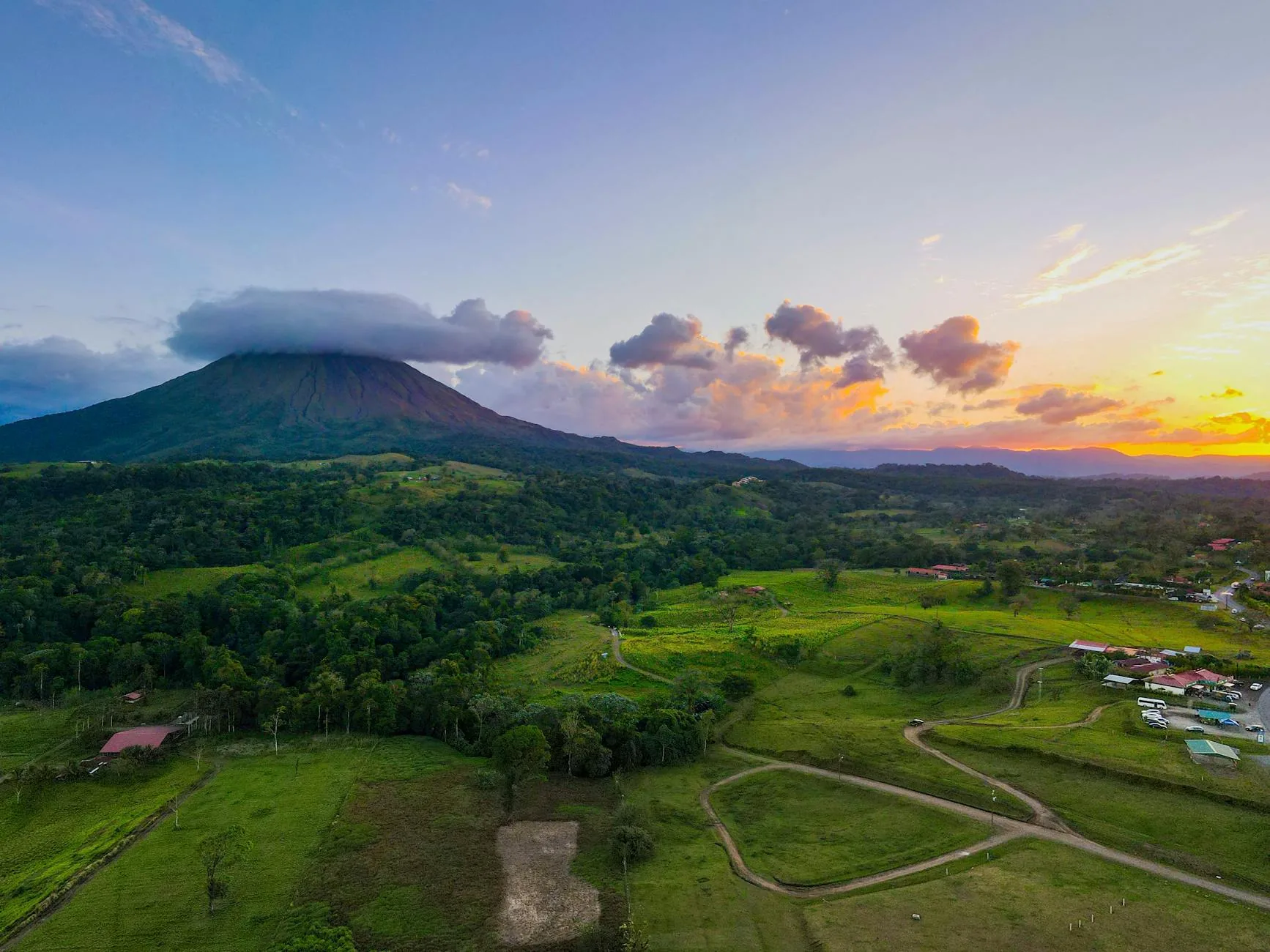
Factsheet: Costa Rica
Costa Rica is a Central American country of 5.2 million people renowned for its stable democracy, exceptional biodiversity and "Pura Vida" philosophy of life. The only Central American country without a military since 1948, it boasts one of the highest Human Development Index scores in the region. Its territorial taxation fully exempts foreign-sourced income, and its Pensionado visa is regularly ranked among the best retirement residency programs in the world. A rare balance of tropical quality of life, institutional security and tax optimization.
Why choose Costa Rica?
Costa Rica is one of the few destinations worldwide to combine strict territorial taxation (foreign income at 0%), exemplary democratic and institutional stability, record biodiversity with 25% of its territory in protected areas, and a philosophy of life (Pura Vida) that attracts retirees and digital nomads seeking balance. Here are the six main reasons that make Costa Rica a top choice.
Costa Rica only taxes locally-sourced income. Foreign pension, foreign dividends, rental income outside Costa Rica, freelance work with foreign clients -- all completely escape Costa Rican taxation. A major advantage for international entrepreneurs and retirees.
More than a slogan, Pura Vida embodies a Costa Rican way of life: embraced slowness, collective optimism, harmony with nature. Costa Rica regularly ranks among the happiest countries in the world according to the Happy Planet Index.
With just 0.03% of the Earth's surface, Costa Rica harbors 6% of the world's biodiversity: jaguars, quetzals, turtles, whales, howler monkeys. National parks (Manuel Antonio, Corcovado, Tortuguero) make the country the world's number 1 ecotourism destination.
Costa Rica abolished its army in 1948 and redirects that budget toward education and healthcare. It is the most stable democracy in Central America, with regular political alternation and solid institutions.
The Costa Rican Pensionado visa regularly ranks among the best retirement residency programs worldwide: accessible from $1,000/month in guaranteed pension, with tax benefits and discounts on numerous services. The Rentista visa offers the same residency for passive income earners ($2,500/month).
New Digital Nomad Visa (2 years, $3,000/month), fiber optics in major cities, coworking spaces in Escazu and Santa Teresa, dynamic international community. The Central Valley offers a perfect climate (20-24°C year-round) and direct flights via Miami or Panama City.
Visa & Residence
Costa Rica offers one of the most attractive arrays of residency visas in Latin America, with accessible financial thresholds and concrete benefits. French citizens enter visa-free for 90 days, then can access residency through several programs tailored to each profile.
Pensionado Visa -- the best retirement visa in Central America
The Pensionado visa is the jewel of the Costa Rican system: you simply need to demonstrate a guaranteed pension of at least $1,000/month (French state pension, supplementary pension, etc.). In return, permanent residency is granted, along with concrete benefits: 50% reduction on airport taxes, customs exemptions for importing personal belongings, discounts at private hospitals and hotels.
Rentista Visa -- for passive income earners and investors
Designed for individuals with guaranteed passive income (dividends, rental income, annuities) of at least $2,500/month from a foreign source. Renewable temporary residency, convertible to permanent residency after 3 years. Ideal for investors or people living on investment income.
Digital Nomad Visa -- for remote workers
Created in 2022, this visa targets remote workers with income of at least $3,000/month from foreign employers or clients. Valid for 2 years, renewable. It does not grant direct access to permanent residency but is ideal for testing the Costa Rican expat experience.
Investor Visa (Inversionista) -- for investors
Individuals making a minimum investment of $150,000 in Costa Rica (real estate, company, productive sector) obtain temporary residency, convertible to permanent after 3 years. Permanent residency is accessible after 3 years of continuous temporary residency. Costa Rican citizenship can be applied for after 7 years of legal residency (or 5 years if married to a Costa Rican national). Costa Rica allows dual nationality.
Cost of living
Costa Rica is more expensive than its Central American neighbors (Nicaragua, Honduras, Guatemala) but remains significantly cheaper than France. Supermarket groceries are close to French prices, but local markets (ferias) are much cheaper. Water and electricity are particularly affordable. However, imports (cars, electronics) are subject to high taxes.
Estimated monthly budget: 1,500 - 2,800 EUR/month (comfortable expat)
📊 Taxation
Costa Rica applies a territorial principle: only income generated in Costa Rica is taxed. Foreign-sourced income (French pension, dividends from a foreign company, rental income from a property in France, freelance income from foreign clients) is completely exempt from Costa Rican tax. A particularly favorable regime for retirees and entrepreneurs with international clients.
🚀 For entrepreneurs
Costa Rica is a serious base for entrepreneurs whose activity is international or focused on service exports. Territorial taxation (0% corporate tax on foreign income), attractive free zone regimes (FREE ZONE) for tech, and no restrictions on foreign capital make it a leading entrepreneurial destination in Latin America.
❤️ Healthcare
Costa Rica has a public healthcare system (the Caja Costarricense de Seguro Social, CCSS) renowned for its quality -- functional but often slow for non-emergencies. Private clinics, on the other hand, offer excellent services at very competitive prices, making the country a leader in medical tourism in Latin America.
Where to live
Costa Rica offers remarkable geographic diversity for such a small country: the Central Valley with a perfect temperate climate, North and South Pacific coasts with a surfer vibe, bohemian Caribbean to the east, and interior mountains for those seeking cooler temperatures. Every expat profile will find their corner of paradise.


Drawbacks to know
Costa Rica is significantly more expensive than Nicaragua, Honduras or Guatemala. Imports (cars, electronics) are subject to high taxes. Supermarkets are close to French prices for imported products.
Outside urban areas, roads can be in poor condition and sometimes require a 4x4. A car is essential for exploring the country. Budget 150-300 EUR/month for rental or purchase of a local vehicle.
The first 200 meters from the high tide line cannot be owned as private property but are granted as concessions. Before buying a coastal property, always verify the land status with a local lawyer -- a frequent source of disputes.
Processing times for residency visas can be long (2 to 8 months). Procedures often require the help of a lawyer specializing in immigration. Costa Rican bureaucracy, while fair, sometimes lacks responsiveness.
The rainy season (May-November on the Pacific coast, variable elsewhere) can be taxing with intense daily downpours. The Caribbean coast is even wetter. The Central Valley and North Pacific coast have a very pleasant dry season (December-April).
Without a bilateral France-Costa Rica treaty, France may tax you on your worldwide income if you do not formally sever your tax ties. Dual support (French tax advisor + Costa Rican accountant) is necessary to secure your situation.
Frequently asked questions
Is the French pension sufficient to qualify for the Pensionado visa?
How does Costa Rican territorial taxation work for a French entrepreneur?
Is Costa Rica safe for family life?
What is the best region in Costa Rica for a digital nomad?
Can foreigners buy real estate in Costa Rica?
Costa Rica vs Panama: which country for expats in Central America?
Explore other destinations
Compare with other countries that might suit you.