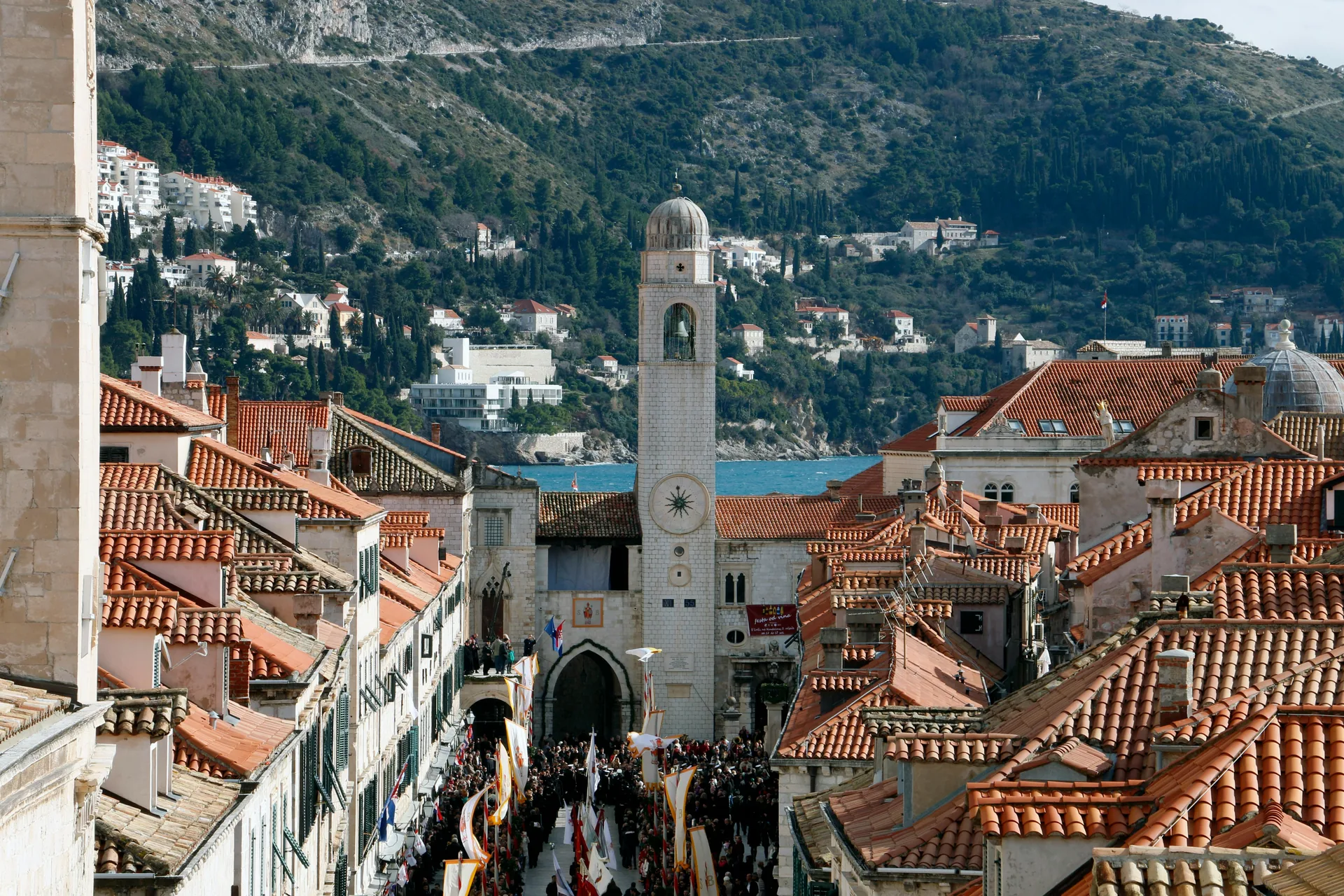
View of Dubrovnik and the Adriatic Sea, Croatia

Moving to Croatia

The pearl of the Adriatic between sea and Europe

Read the guide
European UnionCurrency: EuroCorporate tax 10% under 1M EURDigital Nomad VisaCapital: Zagreb-30/40% vs Paris

Factsheet: Croatia

Croatia is a Southeast European country, an EU member since 2013 and part of the Eurozone since January 2023, making it one of the newest Eurozone members. With its 1,800 km of Adriatic coastline, 1,244 islands and exceptional UNESCO heritage, the country is far more than a summer tourist destination. For those looking to combine Mediterranean quality of life, EU access and competitive taxation, Croatia is an increasingly attractive option. The Croatian digital nomad visa, available since 2021, allows remote workers to settle for up to a year without excessive administrative complexity. The cost of living remains significantly lower than Paris, and cities like Split or Zagreb offer a modern urban setting with quality infrastructure.

🇭🇷
Croatia
The pearl of the Adriatic between sea and Europe
Capital
Zagreb
Official language
Croatian (English widely spoken in tourist cities)
Currency
Euro (EUR) since 2023
Population
~3.9 million
Timezone
UTC+1 (UTC+2 in summer)
🇪🇺 European Union
Yes, since 2013
Digital nomad visa
Yes, up to 12 months
Cost of living (vs Paris)
~30 to 40% cheaper

Why choose Croatia?

Croatia combines rare advantages in Mediterranean Europe: EU membership with free movement, euro adoption, corporate taxation among the lowest in Europe, spectacular Adriatic coastline and a still very reasonable cost of living. For anyone looking to leave a major Western city without leaving Europe, Croatia ticks many boxes. Here are the six main reasons that make Croatia a serious expat destination.

🌍
European Union member
Full free movement for EU citizens, European legal protection, single market, Schengen area access. No visa required for European citizens.
💶
Euro since 2023
Croatia adopted the euro in January 2023, eliminating all currency risk and simplifying transactions for European expats. A considerable practical advantage.
📊
Corporate tax at 10% under 1 million euros
For small and medium businesses, the corporate tax rate is 10% up to 1 million euros in revenue, then 18% above. One of the most competitive rates in the EU.
🌊
Exceptional Mediterranean quality of life
300 days of sunshine per year, crystal-clear Adriatic Sea, Mediterranean gastronomy, relaxed pace of life. A lifestyle hard to match in Europe at this price level.
💻
Operational Digital Nomad Visa
Since 2021, Croatia offers a specific visa for remote independent workers. Minimum income of 2,500 EUR/month, duration up to 12 months, relatively smooth process.
💰
Cost of living 30 to 40% lower than Paris
Outside tourist season, the cost of living in Croatia remains very attractive. Rent, restaurants, transport: an expat's purchasing power is significantly higher.

Visa & Residence

As an EU citizen, you benefit from free movement within the EU and can settle in Croatia without a visa. For non-EU nationals or those who wish to formalize their remote worker status, the Croatian digital nomad visa is a well-designed option. Here are the main available programs.

Digital Nomad Visa (Nomadska viza)

Croatia launched its digital nomad visa in January 2021, among the first European countries to do so. It targets non-EU nationals who work remotely for employers or clients located outside Croatia. For EU citizens, this visa is not technically necessary, but a temporary residence permit can be requested to formalize status. The visa is valid for up to 12 months, not immediately renewable. The minimum required income is 2,500 EUR net per month. Applications are submitted to the police bureau or Croatian consulate depending on your country of residence. Holders of this visa are not considered Croatian tax residents and are therefore exempt from local tax on their foreign income.

Duration
Up to 12 months (not immediately renewable)
Min. income
2,500 EUR/month net
Timeline
15 to 30 days
Target
~65 EUR
Important: Croatian digital nomad visa holders do not become Croatian tax residents. They remain taxable in their home country. Ideal for temporary relocation without a full tax break.

Residence for EU citizens (including all EU nationals)

As an EU citizen, you can settle in Croatia without any visa thanks to EU free movement. After 3 months, you must register with the local administrative office (Ministarstvo unutarnjih poslova) to obtain a residence certificate. This certificate is issued without quotas and without minimum income conditions. After 5 years of continuous residence, you can apply for permanent residence. The procedure is straightforward and can be done in English in most major cities.

Croatian tax residency

To become a tax resident in Croatia and benefit from its taxation, you must spend more than 183 days per year there and have your center of vital interests there (housing, family, activity). This requires a declaration of non-tax-residence in your home country. The France-Croatia tax treaty prevents double taxation. Guidance from an accountant specialized in international taxation is strongly recommended.

Cost of living

Croatia is one of the most affordable countries in the European Union, with a cost of living estimated at 30 to 40% lower than Paris. However, be aware that tourist cities like Dubrovnik and Split see their prices surge in summer, with rents and restaurants that can approach Western European rates during peak months. Outside the summer season or in less touristy cities like Zagreb or Rijeka, the value for money is excellent. The euro adoption in 2023 did not trigger significant inflation contrary to initial concerns.

Estimated monthly budget: 1,200 - 2,000 EUR/month

Expense Monthly amount
1-bed apartment, Zagreb or Split city center 550 - 900 EUR
1-bed apartment, outskirts or secondary cities 350 - 550 EUR
Groceries 180 - 300 EUR
Dining out 120 - 220 EUR
Transport (bus + tram Zagreb) 20 - 40 EUR
Fiber internet 15 - 30 EUR
Private health insurance 50 - 130 EUR

📊 Taxation

Croatia's tax system is structured and relatively straightforward. It combines a two-bracket income tax and one of the lowest corporate tax rates in the EU for SMEs. The France-Croatia tax treaty prevents double taxation for Croatian tax residents. If you are a tax resident in Croatia, your worldwide income is in principle taxable in Croatia and not in your home country.

Income tax
20% up to 50,130 EUR/year, then 30% above. Municipal deductions apply depending on the city of residence.
Corporate tax
10% for companies with annual revenue below 1 million euros. 18% above. One of the most competitive rates in the EU.
Standard VAT
25% (standard rate), 13% on restaurants and certain services, 5% on books and certain basic food products.
France-Croatia tax treaty
Double taxation avoided. Income is taxable in Croatia if you are a tax resident there. A specialized accountant is recommended for the transition.
Nomad visa and taxation
Croatian digital nomad visa holders (non-EU) are not Croatian tax residents. Their foreign income is not taxed in Croatia during the visa period.

🚀 For entrepreneurs

Croatia offers an attractive framework for entrepreneurs, particularly thanks to its 10% corporate tax rate for SMEs. Company creation is accessible and formalities have been considerably modernized. Zagreb has an emerging startup ecosystem, and the country benefits from significant European funds for economic development. For freelancers looking to create a local structure, several options are available.

Creating a d.o.o. (Croatian LLC)
The drustvo s ogranicenom odgovornoscu (d.o.o.) is the equivalent of a limited company. Minimum capital of 2,500 EUR. Online creation possible via the Start system, in a few days. Accounting can be outsourced at very affordable rates (100 to 200 EUR/month).
10% corporate tax for SMEs
Up to 1 million euros in annual revenue, the corporate tax rate is 10%. This is one of the country's most significant tax advantages for small structures. Above this threshold, the rate rises to 18%, still competitive.
Obrt — self-employment status
The Obrt is the equivalent of a sole proprietorship. Simple to create, it allows you to run an independent activity with reduced taxation. Particularly suited to freelancers and consultants settling in Croatia.
Access to European funds
As an EU member, Croatia benefits from significant European structural funds. Grant programs exist for innovative startups and SMEs, particularly in the tech and tourism sectors.

❤️ Healthcare

Croatia's public healthcare system (Hrvatski zavod za zdravstveno osiguranje, HZZO) is accessible to residents who contribute to the social security system. Quality of care is decent in major cities, especially Zagreb which has several university hospitals. For expats in the settling-in phase or digital nomads without contributing resident status, international private health insurance is essential. Dental care is particularly affordable and of good quality, even attracting medical patients from Western Europe.

Public system (HZZO)
Accessible to contributing residents. Decent coverage for basic care. Wait times vary by specialty and region.
Private insurance recommended
50 to 130 EUR/month for decent international coverage. Cigna Global, Allianz Care, SafetyWing. Essential for the first months and for digital nomads.
Medical tourism and dental care
Croatia is recognized in Europe for the quality and value of its dental care. Clinics in Split and Zagreb attract patients from across Western Europe.
Pharmacies and medications
Dense pharmacy network, even in mid-sized towns. Standard European medications are generally available. Prices moderately lower than in Western Europe.

Where to live

Croatia offers very varied living options depending on whether you prefer the continental capital, coastal life or the historic cities of Dalmatia. Zagreb concentrates professional opportunities and services. Split and Dubrovnik charm with their beauty and climate but are very touristy. Rijeka and Zadar offer a good balance between Adriatic life and reasonable prices.

Zagreb
Zagreb
Continental capital with modern infrastructure, rich cultural life, the country's most developed job market, lively cafes and restaurants year-round. Rent 550-900 EUR/month city center. Less touristy and more affordable than coastal cities.
Best for: Entrepreneurs, employees, families
Split
Split
Second-largest city, Dalmatian coast, UNESCO-listed Diocletian's Palace. Exceptional climate, authentic neighborhood life, growing expat community. Rent 600-1,000 EUR/month. Very touristy in summer but pleasant off-season.
Best for: Digital nomads, couples, retirees
Dubrovnik
Dubrovnik
The pearl of the Adriatic, UNESCO ramparts, unique setting in Europe. Very touristy and more expensive than the rest of the country. Ideal for those who can afford premium housing. Off-season, the city regains a pleasant human scale.
Best for: Retirees, high-end freelancers
Rijeka
Rijeka
Third-largest city, industrial port in conversion, among the most affordable rents on the Adriatic coast. Lively student community, quick access to the Kvarner islands. Less touristy, more authentic.
Best for: Students, remote workers, budget-conscious
Zadar
Zadar
Medieval city in central Dalmatia, excellent value for money, airport with European connections, dynamic local market. Less known than Split or Dubrovnik but very popular among expats who avoid the tourist crowds.
Best for: Families, digital nomads, long-term stays

Drawbacks to know

🏖️
Extremely marked seasonality
In coastal cities, summer completely transforms local life: prices double or triple, massive crowds, housing impossible to find. Winter can be very quiet, even depressing in some tourist areas.
💼
Limited salaried job market
Outside Zagreb and outside the tourism sector, finding a local salaried job is difficult, especially without speaking Croatian. Croatia is better suited to remote workers and entrepreneurs than local job seekers.
🗣️
Complex Croatian language
Croatian is a Slavic language with complex declensions. English works well in tourist areas and Zagreb, but remains limited in local administrations and secondary cities. Deep integration requires real linguistic effort.
🌐
Sometimes laborious bureaucracy
Despite progress, Croatian administration can be slow and poorly digitized outside major cities. Some procedures require physical visits and considerable patience.
🚗
Car dependency outside major cities
The public transport network is insufficient outside Zagreb. For exploring the country or living in a rural or semi-rural area, a car is virtually essential.
💸
Coastal housing under pressure
Tourist demand and foreign investment are pushing up property prices, especially in Split and Dubrovnik. Finding quality long-term housing in these cities is becoming increasingly difficult and expensive.

Frequently asked questions

Do I need to speak Croatian to live in Croatia? +
In major cities like Zagreb and Split, and in tourist areas, English is more than sufficient for daily life. Menus, tourist signs and many shops offer English interfaces. However, for administrative procedures, certain local jobs and genuine integration into the local community, Croatian is necessary. Croatian language courses are available in most major cities at very reasonable rates.
What is the difference between the nomad visa and EU residence in Croatia? +
The digital nomad visa is a temporary residence permit created for non-EU nationals who work remotely. It does not grant Croatian tax residency and cannot be immediately renewed. For EU citizens, free movement applies directly: you can settle without a visa and register as a resident after 3 months. The two statuses have very different tax implications.
Do I become a Croatian tax resident with the nomad visa? +
No. The Croatian digital nomad visa does not grant tax residency. Holders of this visa remain taxable in their home country on their income. This is an advantage for some (no tax break disruption), but a disadvantage for those who wish to benefit from the Croatian tax regime. To become a Croatian tax resident, you must register as a long-term resident and spend more than 183 days per year in the country.
What is the cost of living in Dubrovnik vs Zagreb? +
Zagreb is significantly more affordable than Dubrovnik, especially for housing. In Zagreb, a one-bedroom apartment in the city center costs between 550 and 900 EUR/month. In Dubrovnik, the same apartment can cost 900 to 1,500 EUR/month, or even more in season. Dining out and groceries are also more expensive in Dubrovnik. For long-term relocation on a reasonable budget, Zagreb or Zadar are often better choices.
Is Croatia a good country for families? +
Yes, Croatia is generally well-suited for families. Safety is high, the Mediterranean pace of life is pleasant, and the country has a decent public school system. English-language international schools exist in Zagreb. The lower cost of living compared to Paris allows a better standard of living on an equivalent budget. The main challenge for families remains the Croatian language, especially for children's schooling in the local system.
How do I create a company in Croatia? +
The most common legal form is the d.o.o. (equivalent of an LLC). Minimum capital is 2,500 EUR. Creation is possible online via the Croatian START system, in a few days. A notary is needed for the articles of incorporation and a Croatian professional bank account is required. The corporate tax rate is 10% up to 1 million euros in revenue, making it a very competitive option for SMEs and freelancers. A local accountant (100 to 200 EUR/month) is recommended for ongoing management.
Croatia or Serbia for expats? +
These two neighboring destinations have very different profiles. Croatia offers EU membership, the euro, Adriatic coastline and attractive SME taxation, at the cost of a higher cost of living and a coastal property market under pressure. Serbia (non-EU) offers an even lower cost of living, Belgrade is a dynamic capital with a growing startup scene, but without European legal protection and without the euro. The choice depends mainly on your need for EU legal security and your quality-of-life priorities.

Explore other destinations

Compare with other countries that might suit you.