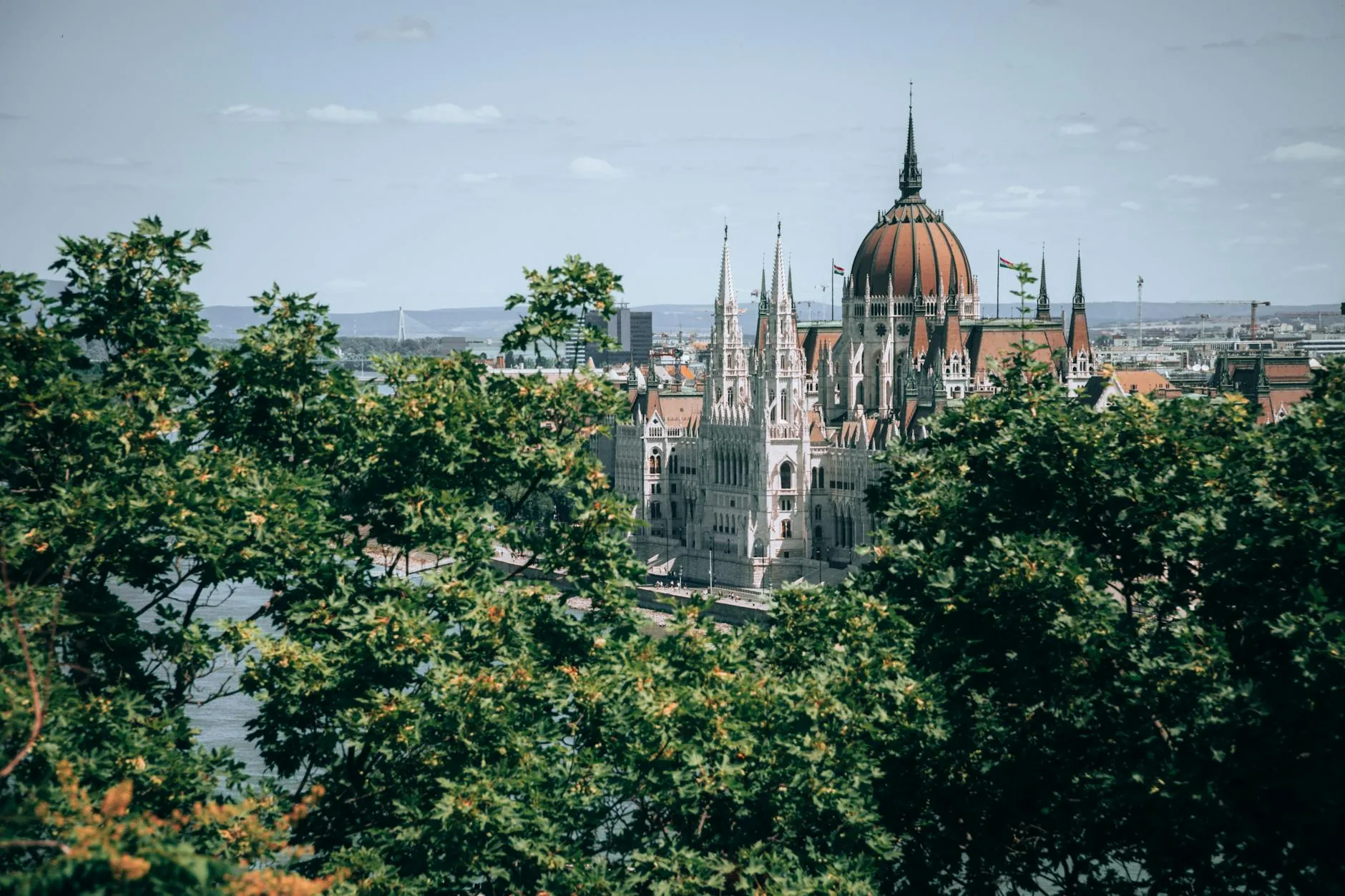
Budapest parliament and Chain Bridge over the Danube

Moving to Hungary

Budapest and the lowest corporate tax in the European Union

Read the guide
EU + SchengenBudapestFlat tax 15% incomeCorporate tax 9% - EU recordHungarian ForintDanube

Factsheet: Hungary

Hungary holds the lowest corporate tax rate in the European Union: 9%. Combined with a 15% flat tax on personal income and a full exemption for holding companies, Hungary's tax framework is one of the most attractive in Europe for entrepreneurs. Budapest is a metropolis of 1.7 million people offering an exceptional quality of life: monumental Art Nouveau and Baroque architecture, a booming food scene, world-famous thermal baths, and intense cultural and nightlife. All at a cost of living 40-50% lower than Paris.

🇭🇺
Hungary
Budapest and the lowest corporate tax in the European Union
Capital
Budapest
Official language
Hungarian
Currency
Hungarian Forint (HUF) - ~400 HUF/EUR
Population
9.7 million
Timezone
UTC+1 / UTC+2 (summer)
🇪🇺 European Union
Yes, EU + Schengen member
Digital nomad visa
EU residence (lakcimbejelento)
Cost of living (vs Paris)
-40 to -50%

Why choose Hungary?

Hungary combines the lowest corporate tax in the EU with a world-class capital and a very affordable cost of living.

🏢
9% corporate tax — the lowest in the European Union
The corporate tax rate is 9%, the lowest among all EU member states. Holding companies benefit from a complete exemption on dividends and capital gains from participations (100% participation exemption). A major advantage for entrepreneurial structures and holdings.
💰
15% income flat tax with capped social contributions
Income tax is a flat 15% on all income. Employer social contributions (SZOCHO) of 13% are capped at 24 times the minimum wage, approximately 5,520 EUR maximum base. Beyond that, no more SZOCHO. Particularly advantageous for high earners.
🏛️
Budapest: world heritage and cultural life
Budapest is one of Europe's most beautiful cities. The Hungarian Parliament on the Danube, the Buda Castle district, Szechenyi and Gellert thermal baths, the Great Market Hall... The city offers cultural and architectural richness comparable to Vienna or Prague, at an even lower cost of living.
💆
Thermal baths and unique quality of life
Budapest sits atop over 100 thermal springs. The baths (Szechenyi, Gellert, Rudas, Lukacs) are frequented daily by locals and expats alike. A unique quality-of-life element in Europe, accessible for just a few euros in your monthly budget.
🍷
Legendary gastronomy and nightlife
Hungary produces excellent wines (Tokaj, Eger, Villany) and Hungarian cuisine is rich and surprising. Budapest is known for its ruin bars (Szimpla Kert), its international dining scene and its festivals (Sziget, Budapest Wine Festival). Nightlife among the most vibrant in Central Europe.
🌍
Holding exemption and international structures
Hungary offers a complete participation exemption: dividends and capital gains on disposals of participations (at least 10%) are fully exempt from corporate tax. Combined with 80+ tax treaties signed by Hungary, it is a top-tier holding jurisdiction in the EU.
🎓
University of Budapest and education level
Budapest is home to several internationally recognized universities (ELTE, BME, CEU - Central European University). Strong pool of qualified human capital. English is well spoken in professional and tech circles. Growing startup ecosystem.
🚄
Strategic Central European location
Budapest is 2h30 by train from Vienna, 7h from Munich, and served by many flights from Ferihegy airport. Excellent base for covering Central and Eastern European markets (Poland, Romania, Slovakia, Austria). Same time zone as France.

Visa & Residence

EU citizens settle in Hungary without a visa. Address registration (lakcimbejelento) is the main formality. Several programs exist for non-EU nationals.

EU Residence — Address registration (Lakcimbejelento)

EU citizens do not need a visa to settle in Hungary. After 3 months of stay, they must register their Hungarian address with the local municipality (lakcimbejelento hivatal). The procedure is simple and free. After 5 years of continuous residence, permanent residence can be requested. The residence card number (lakcimkartya) is essential for all administrative steps (bank account, company, etc.).

Duration
Unlimited (EU)
Min. income
Timeline
1-3 weeks
Target
Free

Guest Investor Visa / White Card

Investment programs for non-EU nationals wishing to establish themselves in Hungary. The Guest Investor Visa requires investment in approved funds or an economic project. The White Card is aimed at highly skilled workers with a Hungarian employer or client. Details and thresholds are subject to change — check with the Hungarian authorities.

Duration
2 years renewable
Min. income
Timeline
30-90 days
Target
Variable depending on program

Cost of living

Budapest is one of the cheapest European capitals for Western expats. The monthly budget for a good comfort level is 1,200 to 2,000 EUR.

Estimated monthly budget: 1,200 - 2,000 EUR/month (Budapest)

Expense Monthly amount
1-bed apartment (V. Belvaros/VI. Terezvaros) 550-850 EUR/month
1-bed apartment (Buda/quiet districts) 450-700 EUR/month
Groceries 150-250 EUR/month
Restaurant (local lunch) 5-9 EUR
Restaurant (fine dining) 20-40 EUR
Public transport monthly pass 30-35 EUR/month
Fiber internet 15-25 EUR/month
Thermal baths (monthly subscription) 40-80 EUR/month

📊 Taxation

Hungary has a particularly advantageous tax system for entrepreneurs and investors: 9% corporate tax, 15% income flat tax, full holding exemption, and a tax treaty with France.

9% corporate tax — the lowest in the EU
The corporate tax rate is 9% on all profits of Hungarian companies. No progressive brackets, no additional tax for large companies (unlike some other countries). This rate applies to Kft (LLC) and Rt (public limited company) alike.
Holding exemption: dividends and capital gains at 0%
Dividends received by a Hungarian company from its subsidiaries (minimum 10% participation) are 100% exempt from corporate tax. Capital gains on disposals of participations (same criterion) are also exempt. This is one of the most comprehensive participation exemptions in the EU. Widely used for international holding structures.
15% income flat tax and capped SZOCHO
Income tax is set at 15% for everyone, with no progressive brackets. Employer social contributions (SZOCHO 13%) are capped at 24 times the annual minimum wage. For a Kft director paying themselves in dividends, the overall tax burden can be very low: 9% corporate tax + 15% income tax on dividends = ~23% overall.
VAT 27% — the highest in the EU
Hungary's VAT is the highest in the European Union at 27%. Reduced rates are 5% and 18% for certain goods. For B2B companies in intra-EU trade or with foreign clients, VAT is neutral. For local B2C activities, it is an element to factor into pricing.
France-Hungary tax treaty
A tax treaty is in force between France and Hungary. It governs tax residency, prevents double taxation and sets withholding tax rates on dividends (15%), interest (10%) and royalties (10%). To break French tax residency, establishing a primary residence in Hungary is required (183 days, center of vital interests).

🚀 For entrepreneurs

Hungary is a prime jurisdiction for European and international entrepreneurs, particularly for holding structures and service companies.

Kft (Hungarian LLC): 8,000 EUR capital
The Korlatolt Felelossegu Tarsasag (Kft) is the most common legal form for SMEs and startups. Minimum capital of 3,000,000 HUF (~8,000 EUR). Creation requires a notarized deed (approximately 500-800 EUR in fees), then registration at the court (birosag) in 2-5 business days. A Hungarian lawyer is mandatory for the creation.
Lawyer mandatory for Kft creation
Unlike some other EU countries, Hungary requires the involvement of a lawyer (ugyved) for Kft creation. Typical fees: 300-800 EUR. The lawyer drafts the articles, files them with the court and supervises registration. Also budget a local accountant (konyvelo): 80-200 EUR/month.
Professional bank account: key step
Opening a professional bank account is mandatory before depositing capital and finalizing the creation. Major Hungarian banks (OTP, Raiffeisen, K&H, CIB) accept foreign entrepreneurs with complete documentation (passport, proof of address, articles of incorporation). Some fintechs (Wise Business, Revolut Business) can serve as a temporary alternative.
Hungarian holding: the optimal structure
For entrepreneurs with activities in multiple countries, a Hungarian holding (Kft or Nyrt) offers full participation exemption, 9% corporate tax on own activities, and access to 80+ tax treaties signed by Hungary. A structure particularly used by European entrepreneurs seeking to centralize their participation income in a tax-efficient manner.

❤️ Healthcare

Hungary has an underfunded public healthcare system but with well-trained doctors. Private clinics in Budapest offer a quality alternative at affordable prices.

Public system: access via contributions
Residents in Hungary must contribute to national health insurance (OEP/NEAK). Employees contribute through their employer. Self-employed and non-salaried directors pay a minimum contribution of approximately 60-80 EUR/month. Grants access to general practitioners (haziorvos) and specialists via a referral system (beutalas).
Private clinics: quality and accessible prices
Budapest has many good-quality private clinics (Duna Medical Center, Medicover, Rose Clinic). Specialist consultations in English for 50-100 EUR. High-quality dental care is highly valued by expats (30-50% cheaper than in Western Europe). Medicover offers comprehensive private health insurance for 80-150 EUR/month.
Thermal medicine and wellness
Budapest's thermal water has been used since Roman times for its therapeutic properties. Some baths (Szechenyi, Gellert) offer medical treatments (rheumatology, physiotherapy, dermatology) partially covered by national insurance for residents. A unique asset for daily health and well-being.
Evacuation to Austria or Slovenia
For highly specialized procedures, Vienna (2h30 from Budapest) offers world-class care. Expats covered by premium international insurance can plan for this option in complex cases. Budapest's university hospitals (SOTE, DEOEC) nevertheless remain good quality for most specialties.

Where to live

The vast majority of expats concentrate in Budapest, which naturally divides between the left bank (Pest) and the right bank (Buda).
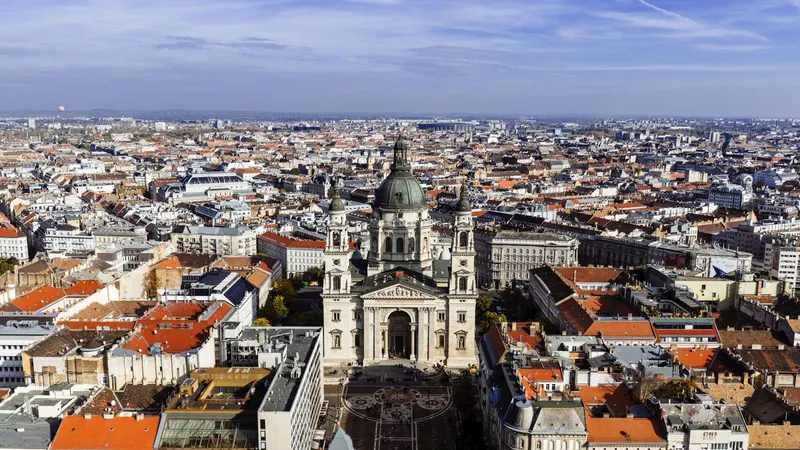
V. Belvaros — Historic center (Pest)
The historic heart of Budapest, with the Great Synagogue, shopping arcades and the business district. Touristy and lively area, higher rents. Ideal for those who want to be at the center of everything, close to restaurants and transport.
Best for: Professionals, traders, urban life enthusiasts
VII. Erzsebetvaros — Jewish quarter and ruin bars
Budapest's most vibrant district, home of the ruin bars (Szimpla Kert, Instant) and the trendy scene. Eclectic architecture, intense neighborhood life, international restaurants. Very popular with young expats and digital nomads. Can be noisy on weekends.
Best for: Young expats, digital nomads, nightlife lovers
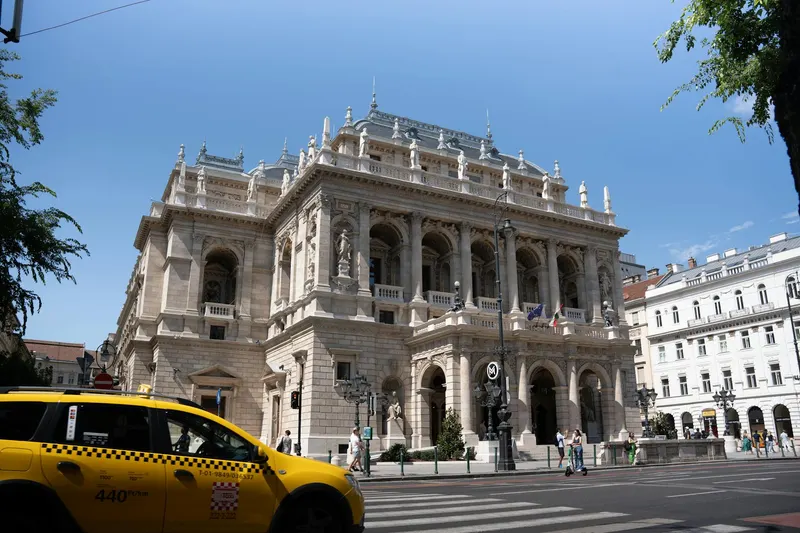
VI. Terezvaros — Andrassy Avenue and Opera
The UNESCO-listed Andrassy Boulevard runs through this elegant district with the Opera, luxury boutiques and historic cafes. Viennese atmosphere, upper class. Rents are high for Budapest but still very affordable compared to Western capitals.
Best for: Executives, affluent families, culture and gastronomy lovers
IX. Ferencvaros — Renovating district
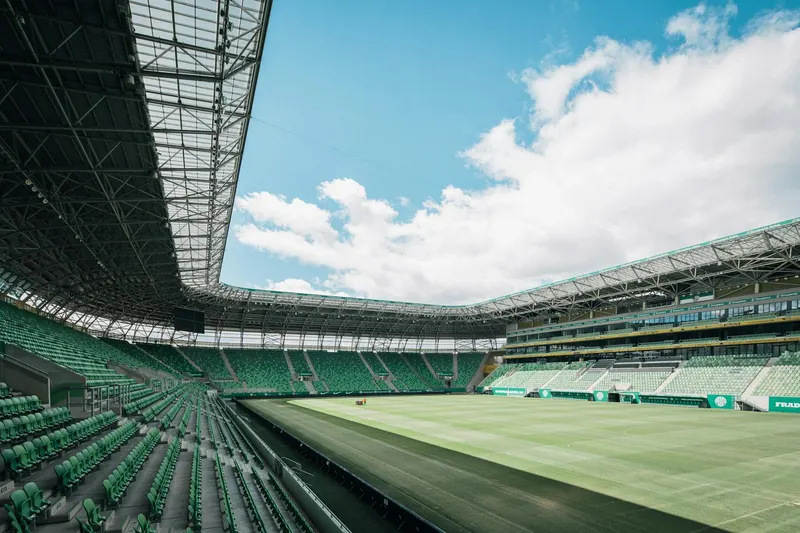
A rapidly gentrifying district with new residential complexes, the national stadium (Puskas Arena), the Great Market Hall. More affordable rents, more diverse local population. Rapidly transforming into a trendy neighborhood.
Best for: Families, young couples, budget-optimized
Buda and Obuda — The hills side
The right bank of the Danube offers a calmer, greener and more residential setting. The Castle district, Buda hills, Gellert baths. Obuda (3rd district) is more local and authentic. Ideal for families seeking calm and nature access while staying close to the center.
Best for: Families, retirees, nature and quiet lovers

Drawbacks to know

🌐
Extremely difficult Hungarian language
Hungarian (magyar) is one of the most difficult languages in the world for speakers of Indo-European languages: agglutinative, 18 grammatical cases, vocabulary with no connection to Latin or Germanic languages. Allow 1-2 years to reach a functional level. In the meantime, English is sufficient in Budapest's professional and tourist circles.
⚖️
Unstable political environment
Hungary under the Orban government is in regular tension with European institutions. Some reforms (judicial independence, press freedom, LGBTQ+ rights) have been criticized. The legal framework remains stable for businesses and real estate, but the institutional environment deserves particular attention for expats.
💱
Currency risk (HUF/EUR)
Hungary has not adopted the euro and the forint (HUF) can be volatile. EUR/HUF has varied between 360 and 430 HUF/EUR in recent years. Expats earning in euros and spending in HUF benefit, but those with fixed local obligations in HUF may face fluctuations.
❄️
Cold winters
Budapest winters are cold (-5 to -15 degrees C possible) and gray from November to March. The city gets less sunlight than Southern Italy or Spain. On the upside, Budapest under snow is magnificent, and winters are the perfect time to fully enjoy the thermal baths and indoor cultural life.
🏢
Higher company creation costs
Creating a Kft requires a mandatory lawyer (300-800 EUR), minimum capital of 8,000 EUR, and opening a bank account that can be complex for foreigners. Compared to Estonia (e-Residency) or the Czech Republic (simple zivno), Hungary involves more formalities and higher initial setup costs.

Frequently asked questions

Is Hungary's 9% corporate tax rate legal under EU law? +
Yes, completely legal. The EU harmonizes certain aspects of VAT and excise duties but corporate tax rates remain under the sovereign authority of member states. Several harmonization attempts have failed. Hungary (9%), Ireland (12.5%) and Bulgaria (10%) maintain their competitive tax advantage within the framework of the OECD agreement on a 15% minimum corporate tax (which mainly targets multinationals with over 750M EUR in revenue).
Can you combine 9% corporate tax and dividends for a low overall tax burden? +
Yes, that is precisely one of the main attractions. Here is the simplified scheme: your Kft generates 100,000 EUR in profit, pays 9,000 EUR corporate tax (9%), distributes 91,000 EUR in dividends subject to 15% income tax (13,650 EUR) and potentially 13% SZOCHO (capped). Total effective burden around 22-25%. For holding structures (inter-company dividends), the full exemption is even more advantageous.
Is a lawyer really mandatory to create a Kft? +
Yes, Hungarian law requires the signature of a lawyer registered with the Hungarian bar for company formation documents. It is not possible to create a Kft directly without going through a local lawyer. Some international service providers (Hungarian Business Services, etc.) offer all-inclusive packages (lawyer + bank account + address) for 1,500-3,000 EUR total, which simplifies the process for foreigners.
Is Budapest suitable for families with children? +
Yes, Budapest is a very pleasant city for families. The Buda districts (II, XII) are particularly well-suited: green spaces, quality schools, safety, quiet. Several international schools offer English-language programs (International School of Budapest, Greater Grace School). Children's activities (thermal pools, zoos, parks) are plentiful and inexpensive.
Does Hungary offer a digital nomad visa? +
EU citizens do not need one. For non-EU nationals, Hungary has introduced the White Card for highly skilled workers and the Guest Investor Visa for investors. These programs are less mature than the nomad visas of Croatia or Estonia, but are evolving. Check directly with the Hungarian consulate for current conditions.
Is English sufficient to live and work in Budapest? +
In international professional circles (tech, finance, multinationals), English is perfectly sufficient. Restaurants, museums and central transport accept English without issue. For administrative procedures (municipality, NEAK, tax authority) and neighborhood life, Hungarian is necessary. A translator or local assistant is indispensable for the first months.

Explore other destinations

Compare with other countries that might suit you.