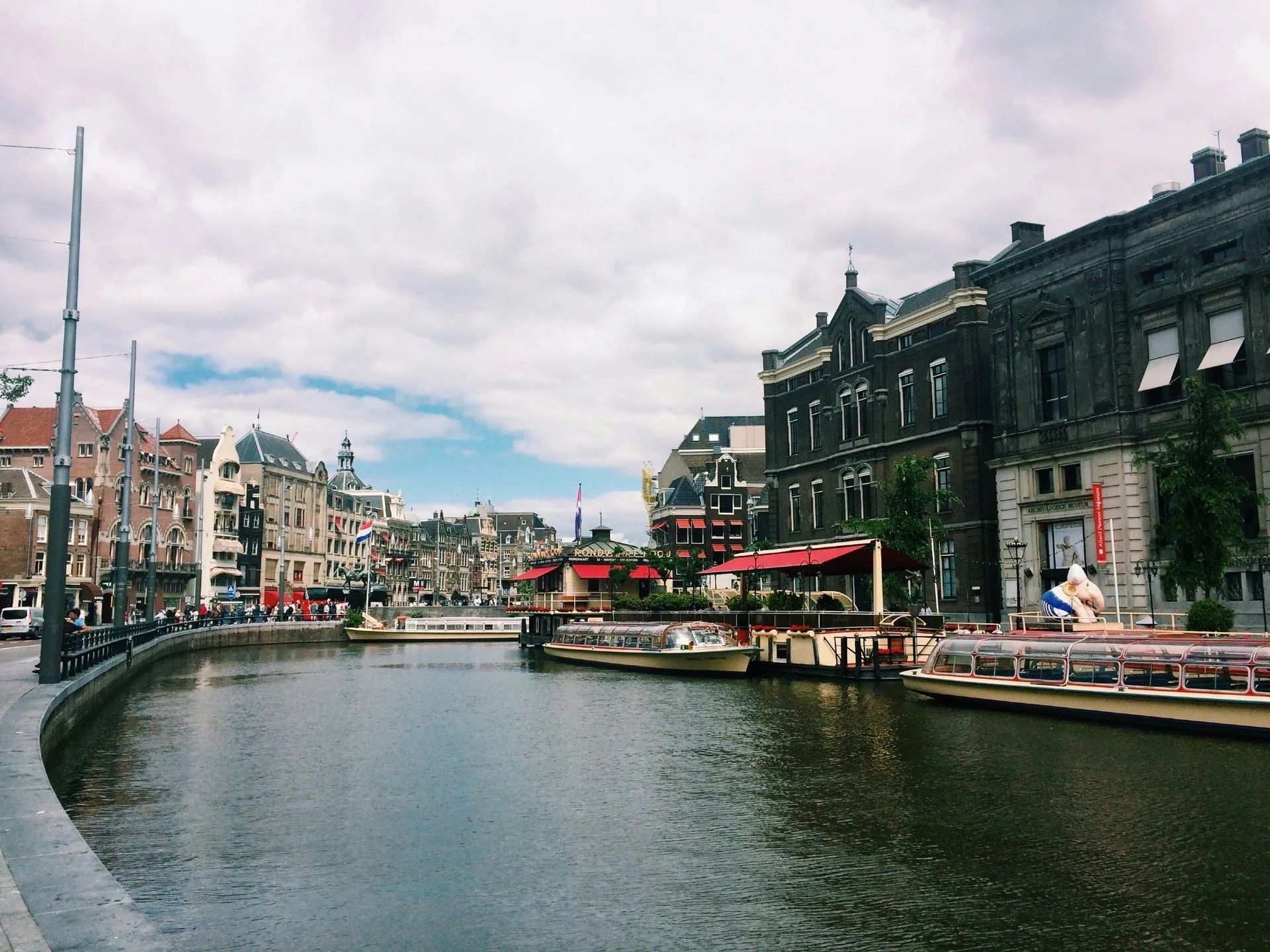
Factsheet: Netherlands
The Netherlands is a founding member of the European Union, a member since 1957 and in the Eurozone since 1999. With Amsterdam as the world capital of diamonds and alternative finance, Rotterdam as Europe's largest port, The Hague as the international diplomatic capital and Eindhoven as a tech and design hub, the country offers unique economic diversity in a compact territory. Its central geographic location in Northwestern Europe, combined with an exceptional transport infrastructure network, makes it the continent's logistics crossroads. For expats, the flagship measure is the 30% ruling, a tax exemption that allows qualified foreign workers to be taxed on only 70% of their salary for five years, making it one of the most advantageous regimes in Europe for international executives. The country is also recognized for its high quality of life, legendary tolerance, world-unique cycling infrastructure and a healthcare system among the best in Europe.
Why choose Netherlands?
The Netherlands combines a unique tax regime for expats (the 30% ruling), exceptional infrastructure quality, a highly developed international community and a central European position. Amsterdam, Rotterdam and Eindhoven rank among the most attractive cities in Europe for international professionals. Here are the six major advantages for a French expat.
The Netherlands' best-known measure for expats: if recruited from abroad by a Dutch employer, up to 30% of your gross salary can be paid tax-free for 5 years. A concrete and immediate tax advantage.
Amsterdam is 3h from Paris by Thalys, 1.5h from London by plane, 4h from Berlin. Schiphol is one of the world's most important airport hubs. Ideal for professionals who travel frequently.
The Netherlands has the highest level of English proficiency in non-English-speaking Europe. Almost all businesses, restaurants, administrations and city services operate in English. Integration is immediate for English speakers.
35,000 km cycling network, reliable public transport, clean and well-organized cities, excellent healthcare. The country regularly ranks among the world's best for quality of life.
ASML (global semiconductor leader), Booking.com, Philips, Shell, Heineken, ING... Dutch multinationals and European headquarters of major tech firms are numerous. A highly diversified job market.
Solid rule of law, independent judiciary, protection of expat rights, political and economic stability. The Netherlands is one of Europe's most stable and reliable countries for long-term settlement.
Visa & Residence
As a French citizen, you benefit from EU free movement and can settle in the Netherlands without a visa. The main measure to know for expats is the 30% ruling, which is not a visa but a conditional tax advantage to be arranged with your employer. Here are the main procedures for a French national wishing to settle in the Netherlands.
EU free movement for French nationals
As an EU citizen, you need no visa to settle in the Netherlands. After 4 months of stay, you must register with the municipal authority (gemeentehuis) and obtain a BSN (Burgerservicenummer), the Dutch equivalent of a social security number. This number is essential for working, paying taxes, opening a bank account and accessing public services. The procedure is straightforward and can be completed at city halls (gemeentehuis) in major cities, often without an extended appointment.
30% Ruling — The key tax measure
The 30% ruling (or 30% regeling) is a Dutch tax measure that allows an employer to pay up to 30% of an international employee's gross salary tax-free, provided that employee was recruited from abroad and possesses skills scarce on the Dutch market. The main conditions are: being recruited from abroad (or having lived outside the Netherlands in the preceding 16 months), meeting a minimum salary threshold (approximately 46,660 EUR gross in 2026 for those under 30 with a recent degree, or approximately 66,667 EUR gross for others). The maximum duration is 5 years. This measure provides a significant tax reduction and administrative simplifications (exemption from declaring foreign assets under certain conditions). It must be requested by the employer from the Dutch tax authority.
Self-employed residency (Zelfstandige)
If you wish to pursue self-employment in the Netherlands, you must register with the KVK (Kamer van Koophandel, Chamber of Commerce) and obtain a KVK number. Registration is possible online or in person, at a cost of approximately 50 EUR. As an EU citizen, no specific visa is required. You must declare your activity to the tax authorities (Belastingdienst) and choose a legal structure: eenmanszaak (sole proprietorship) or BV (Besloten Vennootschap, Dutch LLC). The ZZP status (Zelfstandige Zonder Personeel, freelancer without employees) is very common in the Netherlands.
Cost of living
The Netherlands is significantly more expensive than France, particularly for housing. Amsterdam is one of the most expensive cities in Europe for rent, at levels comparable to Paris or Munich. Rotterdam and Utrecht are somewhat more affordable, and Eindhoven or The Hague offer better value. Beyond housing, the cost of living is comparable to Paris for food and transport. The 30% ruling, when applicable, more than offsets this premium for expat executives.
Estimated monthly budget: 2,000 - 3,000 EUR/month
📊 Taxation
The Dutch tax system is sophisticated and offers interesting measures for expats and entrepreneurs. Income tax is progressive and can reach 49.5% for high earners, but the 30% ruling significantly reduces the burden for eligible expats. Corporate tax, structured in two brackets, remains competitive for SMEs. The BV (Dutch LLC) is the reference structure for entrepreneurs seeking to optimize their taxation. The France-Netherlands tax treaty prevents double taxation.
🚀 For entrepreneurs
The Netherlands is one of Europe's most attractive destinations for entrepreneurs, thanks to the BV structure (Besloten Vennootschap), competitive corporate tax, a developed venture capital ecosystem and a highly international business culture. Amsterdam and Eindhoven are recognized startup hubs, and accelerators like Startupbootcamp, THNK and YES!Delft support ambitious entrepreneurs.
❤️ Healthcare
The Dutch healthcare system is recognized as one of the best and most efficient in Europe. It is based on mandatory health insurance (basisverzekering) that every resident must take out with an approved private insurer. The government sets the minimum benefits covered, and insurers compete on price and services. The cost of the basisverzekering is around 130 to 160 EUR/month depending on the insurer and options. There is also a mandatory annual deductible (eigen risico) of 385 EUR in 2026. For low incomes, government assistance (zorgtoeslag) can partially offset this cost.
Where to live
The Netherlands is a dense country of less than 42,000 km2, but its cities have very distinct identities. Amsterdam is the cultural and tourist capital, Rotterdam the city of bold architecture and the port, The Hague the international institutional capital, Utrecht the medieval-charm university city, and Eindhoven the design and high-tech hub.


Drawbacks to know
Amsterdam is one of the most difficult cities in Europe for finding housing. Rents have skyrocketed, availability is extremely limited, and competition between applicants is intense. It often takes several months of active searching to find a decent apartment at a reasonable price.
Without the 30% ruling, the Netherlands is significantly more expensive than France. Rent, insurance, restaurants, childcare: a family's monthly budget can easily exceed 4,000 EUR in Amsterdam without any particular luxury.
The top marginal rate can reach 49.5%. Without the 30% ruling, the tax burden on high incomes is very heavy. This measure is limited to 5 years, meaning that after this period, personal taxation can become significantly less advantageous.
While English suffices in the professional world and major cities, Dutch remains essential for deeper social integration, access to some public sector jobs and navigating local administration. It is a difficult language for French speakers but not impossible — closer to English than to French.
The Netherlands shares the same oceanic climate as the UK: overcast skies much of the year, frequent winds, cold and dark winters. Summers are mild but short. For someone from southern France or used to sunshine, the change can be difficult.
Cycling is king in the Netherlands, but this means learning to navigate dense bicycle traffic with its own codes. Bike lanes can be confusing for newcomers, and pedestrian-cyclist accidents are common. An adjustment period is needed.
Frequently asked questions
What is the 30% ruling and who can benefit?
Is English sufficient to live in the Netherlands?
How does health insurance work in the Netherlands?
Is it better to create a BV or work as a ZZP in the Netherlands?
Is the Netherlands well-suited for families?
Netherlands or Ireland for a French tech expat?
Explore other destinations
Compare with other countries that might suit you.