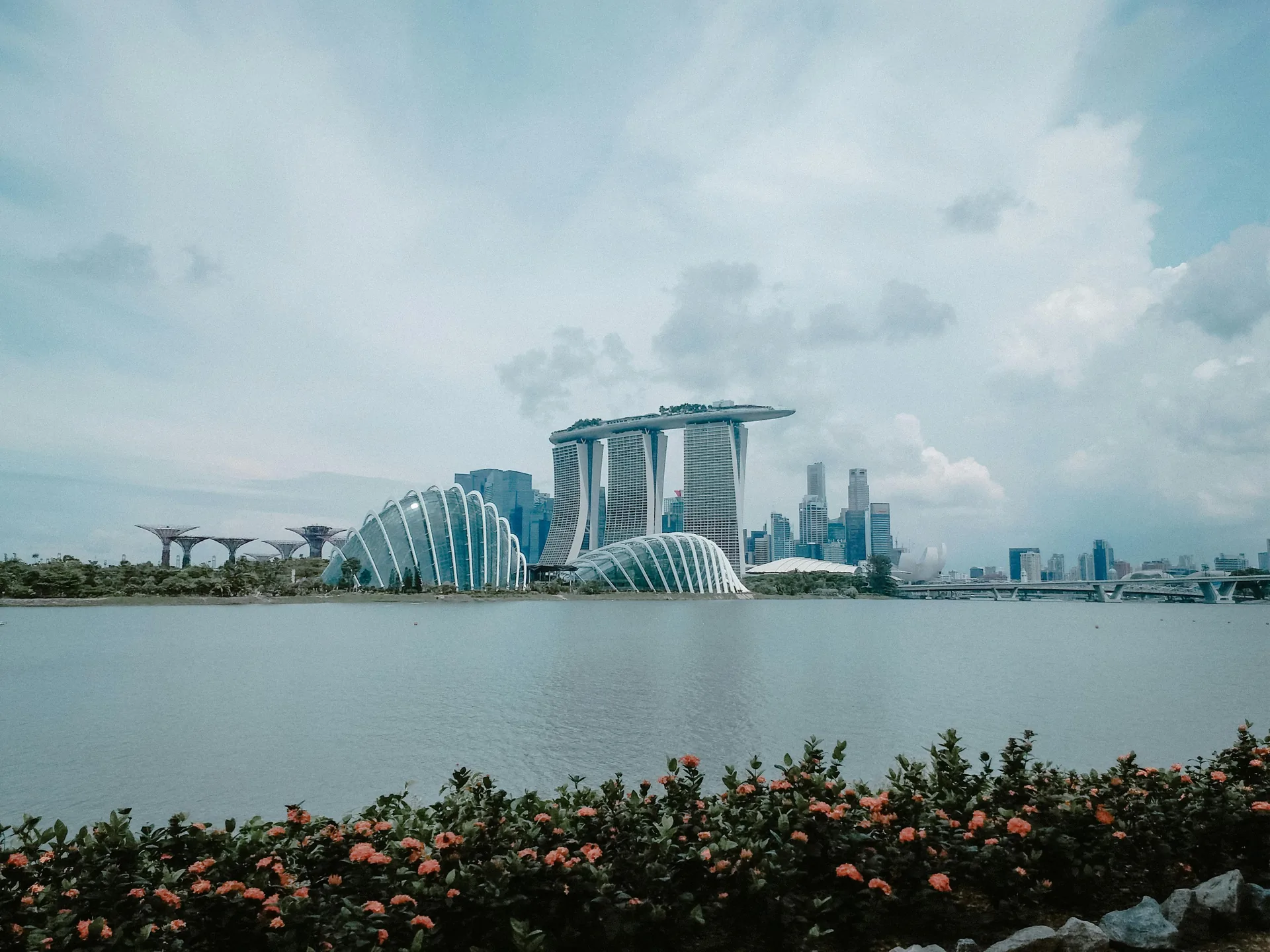
Factsheet: Singapore
Singapore is an island city-state of 734 km2 located at the tip of the Malay Peninsula, at the crossroads of major trade routes between Asia, Europe, and the Americas. With only 6 million inhabitants, it is one of the most competitive, wealthiest, and best-organized economies in the world. For an expatriate seeking an Asian hub with a solid legal system, competitive taxation, and world-class infrastructure, Singapore remains the absolute reference in Southeast Asia. The city-state stands out with a unique combination: zero capital gains tax, zero inheritance tax, a progressive income tax capped at 22%, and a business environment ranked first worldwide by the World Bank Ease of Doing Business Index. The official business language is English, which eliminates the language barrier for most Western expatriates.
Why choose Singapore?
Singapore combines unique assets that no other Asian destination offers simultaneously: Anglo-Saxon legal certainty, among the most favorable taxation in Asia, world-class infrastructure, and a strategic geographic position. This package explains why the city-state hosts the regional headquarters of thousands of multinationals and attracts tens of thousands of qualified expatriates each year. Here are the six main reasons Singapore deserves serious consideration.
Income tax from 0 to 22% only (0% up to 20,000 SGD/year), no capital gains tax, no inheritance tax, no tax on dividends received from abroad.
Singapore hosts the Asia-Pacific regional headquarters of thousands of multinationals. The best business ecosystem in Asia, with a reliable and transparent Anglo-Saxon legal framework.
No language barrier for professionals. The entire administrative, judicial, and commercial system operates in everyday English.
Less than 7 hours from most major Asian cities. Changi Airport ranked best in the world. An ideal transit hub for frequent business travelers.
One of the safest countries in the world. Premium healthcare, transport, and education infrastructure. Near-zero crime rate, clean and well-managed environment.
Strong demand for qualified profiles in finance, tech, logistics, and consulting. Among the highest salaries in Asia. Numerous opportunities for international executives and entrepreneurs.
Visa & Residence
Singapore does not have a digital nomad visa in the traditional sense. Legal access to work or set up a business goes through specific passes issued by the Ministry of Manpower (MOM). These passes are subject to strict income and qualification criteria, making them accessible primarily to qualified professionals and serious entrepreneurs.
Employment Pass (EP)
The Employment Pass is the key document for highly qualified foreign employees working for a Singaporean company. It is issued by the Ministry of Manpower and requires a minimum monthly salary of 5,000 SGD (approximately 3,400 EUR) for those under 25, an amount that increases progressively with experience (a seasoned professional aged 40 must justify at least 10,500 SGD monthly since the 2023 COMPASS reform). The employer submits the application online, and processing time is generally 3 to 8 weeks. The EP is renewable every 2 to 3 years and opens the path to Permanent Residency after a few years.
EntrePass (Entrepreneurs)
The EntrePass targets foreign entrepreneurs wishing to create and run an innovative startup in Singapore. Unlike the Employment Pass, it does not require a local employer -- you are the one creating the company. Criteria include: company incorporated less than 6 months ago, innovative activity in a high-value sector (tech, biomedical, clean energy...), and demonstration of significant growth potential. Applications are evaluated by Enterprise Singapore. Once obtained, it allows you to manage your business and hire foreign employees.
Permanent Residency (PR)
After 2 to 5 years of legal residency in Singapore via EP or EntrePass, it is possible to apply for Permanent Resident status. This process is not automatic and remains at the discretion of the Immigration and Checkpoints Authority (ICA). Criteria include length of residency, salary level, CPF contributions, and community involvement. PR status grants access to the Central Provident Fund, cheaper HDB housing, and constitutes a step toward Singaporean citizenship.
Cost of living
Singapore is one of the most expensive cities in the world, regularly ranked in the global top 5 according to the ECA International and Mercer cost of living indices. Housing is the dominant expense: a one-bedroom apartment in a central area easily exceeds 3,000 SGD/month (approximately 2,000 EUR). The good news is that public transport is exceptional and cheap, food in hawker centres is affordable, and local salaries more than compensate for this high cost for qualified professionals.
Estimated monthly budget: 3,000 - 5,000 EUR/month
📊 Taxation
Singapore's tax system is one of the most attractive in the developed world. It is based on a territorial principle: only income earned or received in Singapore is taxable. Foreign-source income (dividends, capital gains, rental income outside Singapore) is generally not taxed. Income tax is progressive but capped at 22% from 320,001 SGD/year, with a total exemption up to 20,000 SGD/year. There is no capital gains tax, no inheritance tax, and no dividend tax.
🚀 For entrepreneurs
Singapore is regularly ranked as the best place in the world to do business. Setting up a company is simple, fast, and inexpensive. The regulatory environment is predictable, the judicial system reliable, and intellectual property protection among the strongest in Asia. For an entrepreneur seeking to establish a base in Asia with a solid legal framework and advantageous taxation, it is the undisputed reference.
❤️ Healthcare
Singapore has one of the best healthcare systems in Asia and the world, regularly ranked among the most efficient by the WHO. The system operates on a mixed model: subsidized public hospitals and very high-quality private clinics. Expatriates with an Employment Pass do not have automatic access to the subsidized system and must insure themselves through a private policy, generally partially covered by the employer for salaried workers. Care is excellent but costs are among the highest in Asia.
Where to live
Singapore is a city-state, but its different neighborhoods offer very distinct atmospheres and resident profiles. Your choice of neighborhood directly impacts your quality of life, commute times, and housing budget.


Drawbacks to know
3,000 to 5,000 EUR/month for a comfortable lifestyle. Housing alone can represent 50% of the budget. Hard to justify without a local salary or significant income.
30 to 35 degrees C with 80-90% humidity permanently, no real cold season. Air conditioning is ubiquitous but outdoor heat remains exhausting for many.
Singapore is known for its strict public behavior laws (fines for chewing gum, graffiti, eating in the metro). A very orderly living environment that does not suit everyone.
The real estate market is one of the most expensive in the world. Property access for foreigners is very restricted and extremely costly (60% ABSD for foreigners on property purchases).
The expat community is large but often insular. Building deep connections with locals can be difficult. Singaporean society is competitive and the professional pace of life is intense.
Only 734 km2. No mountains, no vast natural spaces. Weekends are often spent traveling to Bali, Malaysia, or Thailand for lack of sufficient local getaways.
Frequently asked questions
Can you move to Singapore without an Employment Pass?
How to become a Singapore tax resident?
What is the quality of international schools in Singapore?
How to open a bank account in Singapore?
Is Singapore suitable for families?
Singapore or Dubai: which destination to choose?
Can you buy property in Singapore as a foreigner?
Explore other destinations
Compare with other countries that might suit you.