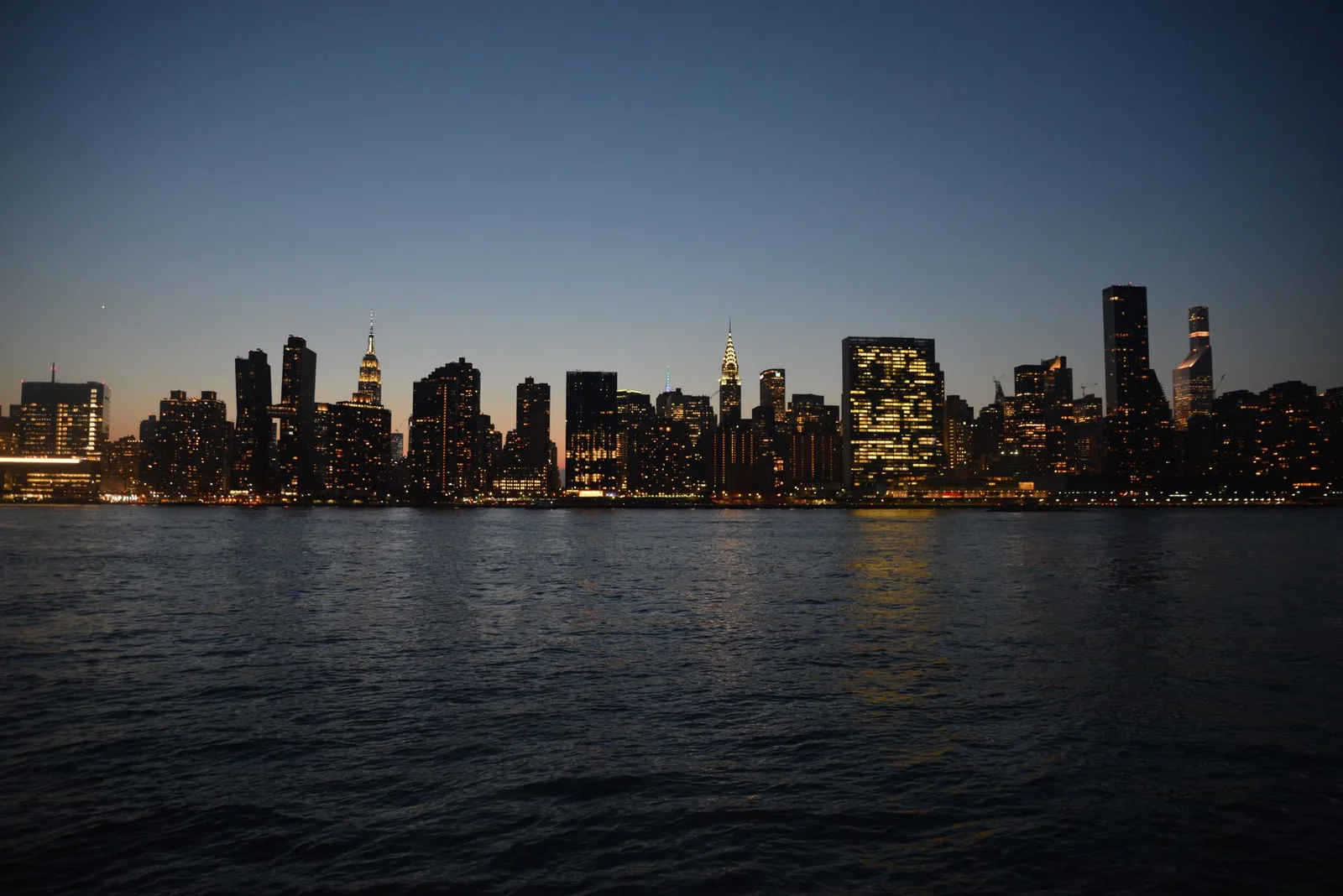
New York City skyline at dusk, United States

Moving to United States

The land of high salaries and opportunity β€” provided you master visas, worldwide taxation and private healthcare

Read the guide
North AmericaDollar (USD)E-2 Visa (treaty country)Worldwide taxationPrivate healthcare168,000+ registered French nationals

Factsheet: United States

The United States is the second-largest destination for French expatriates worldwide, after Switzerland: more than 168,000 French nationals were registered with consular authorities in 2025 (and likely 3 to 4 times more in reality). What attracts them: unmatched salaries by European standards in tech, finance and entrepreneurship, the world's largest venture capital market, and a domestic market of 342 million consumers. But the downsides are real: no digital nomad visa, slow and precarious immigration, worldwide income taxation, and a private healthcare system where a hospital stay can cost tens of thousands of dollars. This guide gives you the real, sourced figures so you can make an informed decision.

⚠️ Disclaimer: US immigration and taxation are complex and evolve quickly (Trump administration, "One Big Beautiful Bill" 2026). This guide is informational and sourced as of June 2026; consult an immigration attorney and a bilingual French-American accountant before making any decision.

πŸ‡ΊπŸ‡Έ
United States
The land of high salaries and opportunity β€” provided you master visas, worldwide taxation and private healthcare
Capital
Washington D.C. (New York is the largest city)
Official language
English
Currency
US Dollar (USD)
Population
~341.8 million (Census, 2025)
Timezone
6 time zones (UTC-5 to UTC-10)
πŸ‡ͺπŸ‡Ί European Union
No (outside EU)
Digital nomad visa
No digital nomad visa (working under ESTA is prohibited)
Cost of living (vs Paris)
Variable: Austin ~-10%, New York ~+26% (excluding rent)

Why choose United States?

If the United States remains a magnet for ambitious French nationals, it is for concrete reasons: compensation, market size, ecosystem. Here are the six main advantages.

πŸ’΅
Significantly higher salaries
Average net salary ranges from ~$4,250/month in Miami to ~$7,870/month in San Francisco (Numbeo, 2026). Senior tech profiles often exceed $200,000–$400,000/year in total package in the Bay Area.
πŸš€
The #1 entrepreneurial ecosystem
More than $170 billion in venture capital invested annually, company formation in a matter of days (Delaware, Wyoming), and a risk-taking culture far more permissive than in France.
πŸ™οΈ
A giant domestic market
342 million consumers, no barriers between states. A local success can scale to continental level.
πŸ“ˆ
Mobility and meritocracy
Dynamic labor market, rapid advancement, booming sectors (AI, biotech, defense). Merit and initiative are valued and rewarded quickly.
πŸŒ…
Extreme geographical diversity
From Miami sunshine to national parks, California beaches to cosmopolitan metropolises β€” all without internal borders.
πŸ›οΈ
Sometimes zero state income tax
Florida, Texas, Nevada, Wyoming: 0% state income tax. A major saving for high earners compared to California (13.3%) or New York (10.9%).

Visa & Residence

This is THE point that blocks most projects: there is no digital nomad visa in the United States, and working (even remotely for a French employer) under ESTA is prohibited. Here are the real pathways, depending on your profile.

ESTA / B (short stay β€” NO work permitted)

France is in the Visa Waiver Program: entry without a visa for up to 90 days for tourism or business (meetings, conferences). Working is formally prohibited, including remotely β€” customs (CBP) can deny entry. Source: CBP / USCIS.

Duration
90 days max
Min. income
N/A
Timeline
Immediate (online)
Target
~$21 (ESTA)
Grey area to avoid: remote work for a foreign employer under ESTA remains a ground for denial of entry.

E-2 Visa β€” Treaty investor

THE route for entrepreneurs: France has been an E-2 treaty country since 1960. You must invest a real and 'at-risk' amount in an operating business (no legal minimum, but ~$80,000–$100,000 in practice), manage it and hold a substantial share. Application filed directly at the embassy in Paris. Source: travel.state.gov / USCIS.

Duration
48 months, indefinitely renewable
Min. income
~$80,000–$100,000 invested
Timeline
Several months
Target
~$315 consular fees + $8,000–$15,000 attorney fees
High approval rate (>85–90%) with a credible business plan. Spouse can work.

L-1 Visa β€” Intracompany transfer

For executives/managers (L-1A) or specialists (L-1B) transferred from a French subsidiary to the US entity of the same group. Must have worked β‰₯1 year in the past 3 years for the foreign entity. No quota or lottery. Source: USCIS.

Duration
L-1A: 7 years max / L-1B: 5 years max
Min. income
N/A (salaried)
Timeline
3–6 months (15 days with premium)
Target
Employer fees + ~$2,805 optional premium
The L-1A is an excellent stepping stone to the EB-1C green card.

O-1 Visa β€” Extraordinary ability

For recognized profiles (science, arts, business, sport, film) meeting at least 3 criteria (awards, publications, critical role, high compensation…). No quota or lottery; 2025 USCIS clarifications also benefit younger profiles. Source: USCIS.

Duration
1 to 3 years, renewable
Min. income
N/A
Timeline
Several months
Target
Employer fees + attorney

H-1B Visa β€” Specialty occupation (lottery)

For a qualified employee recruited by a US employer (degree β‰₯ bachelor's). Annual cap of 85,000 allocated by lottery: ~35% selection rate for 2026. The employer must sponsor; self-petition is not possible. Source: USCIS.

Duration
3 years, renewable 3 years (6 years max)
Min. income
N/A (salaried)
Timeline
Annual lottery (March), starts October
Target
Employer fees
Random: 336,000 applications for 118,000 selected in 2026.

EB-5 / DV Lottery / Family β€” Green card

Permanent residence: through investment (EB-5, $800,000 in a TEA zone, otherwise $1,050,000 + 10 jobs created); by random draw (DV Lottery β€” France is eligible, but odds are low); or through family (spouse/parent of US citizen, 12–26 months). Source: USCIS / travel.state.gov.

Duration
Permanent (green card)
Min. income
EB-5: $800,000 (TEA zone)
Timeline
1–2 years (family) to several years (employment)
Target
Varies by route
Warning: the green card triggers worldwide taxation for life as long as you hold it.

Cost of living

The cost of living varies enormously by city: Austin can be ~10% cheaper than Paris excluding rent, while New York is ~26% more expensive with rents up to +141%. The biggest expense everywhere: housing and healthcare. Data from Numbeo, June 2026.

Estimated monthly budget: ~$6,880/month for an expat (housing ~$2,300, transport ~$1,170, food ~$890, healthcare ~$540) β€” source Expatica 2026.

Expense Monthly amount
Studio city center (New York) ~$4,166/month
Studio city center (San Francisco) ~$3,614/month
Studio city center (Austin) ~$1,963/month
Restaurant meal (budget) $20–$30
Individual health insurance (ACA, ~40 years old, no subsidy) ~$750/month
Average net salary (by city) $4,250–$7,870/month

πŸ“Š Taxation

This is the most treacherous aspect of the United States β€” the only major country that practices citizenship-based taxation. Essential reading before targeting a green card.

Worldwide taxation of residents and citizens
Every US citizen and every green card holder is taxed on their WORLDWIDE income, regardless of where they live. Tax residents (substantial presence test: ~183 days) are too. Becoming a citizen means committing to file with the IRS for life.
France-US tax treaty (double taxation avoidance)
Signed August 31, 1994 (in force December 30, 1995, amended in 2004 and 2009), it avoids paying the same tax twice through a foreign tax credit. It does NOT eliminate reporting obligations. Official text: IRS / impots.gouv.fr.
FATCA (Form 8938) and FBAR (FinCEN 114)
Any 'US Person' must report foreign accounts: FBAR from $10,000 cumulative at any time; FATCA from $50,000 (single resident). FBAR/FATCA penalties: starting at $10,000 per violation. Your French accounts, life insurance, PEA are all concerned.
Federal income tax β€” progressive (7 brackets, 2026)
From 10% (up to $12,400) to 37% (above $640,600) for a single filer. Standard deduction 2026: $16,100 (single). Source: IRS ('One Big Beautiful Bill').
State taxes: wide variance
Florida, Texas, Nevada, Wyoming, Washington: 0% state income tax. At the other extreme: California 13.3% (highest), New York 10.9% (+ NYC 3.876%). Source: Tax Foundation 2026.
Social security agreement (totalization)
In force since July 1, 1988: no double pension contributions, and totalization of France/USA periods for pension rights. Note: it does NOT cover health insurance. Source: SSA / CLEISS.

πŸš€ For entrepreneurs

Forming a company is fast and flexible, but the choice of structure and state of incorporation have real tax and legal consequences.

LLC: simplicity and pass-through taxation
Profits flow directly to members (no double taxation). But for a non-resident foreign member, 37% withholding tax on US income. Ideal at startup stage outside of fundraising.
C-Corp: essential for raising funds
Entity taxed at 21% at the federal level, theoretical double taxation (reduced by the convention on dividends). US VCs almost universally require a Delaware C-Corp. Allows reinvestment without immediate taxation.
Why Delaware
Stable and predictable corporate law (Court of Chancery), member confidentiality, well-established legal infrastructure. Both LLCs and C-Corps can be incorporated there even if the business operates elsewhere.
Link with the visa
The E-2 can be structured around an LLC or C-Corp (under investment and management conditions). The L-1 requires an existing affiliated French entity. Since March 2025, new entities are exempt from beneficial ownership reporting (CTA).

❀️ Healthcare

This is the weak point: no universal system. Insurance is private, through your employer or at your own expense, and costs are among the highest in the world.

Essential and expensive insurance
Employer-sponsored individual coverage: average premium ~$9,325/year (~$777/month). Family coverage: ~$27,000/year. Individual ACA market (~40 years old): ~$750/month without subsidy in 2026 (an ~20% increase, the largest since the ACA). Sources: KFF / Mercer.
Real financial risk
Deductibles and out-of-pocket costs add to premiums. An unexpected hospitalization can cost tens of thousands of dollars, even with insurance. It is the leading cause of personal bankruptcy in the USA.
What about French social security?
It does not durably cover care in the USA. Many expats keep international coverage (CFE β€” Caisse des FranΓ§ais de l'Γ‰tranger β€” or a private insurer) in addition to a US plan.

Where to live

Five major destinations, five very different profiles β€” from salaries to state taxes to quality of life.

New York
New York
~26% more expensive than Paris excluding rent, rents +141%. The heaviest tax burden (state 10.9% + city 3.876%). Metro everywhere, no car needed.
Best for: Finance, tech, fashion, media, law, arts
San Francisco / Bay Area
Highest average net salary (~$7,870/month) but California at 13.3% and rents +95%. Unrivaled access to the VC network; worsening social issues in some neighborhoods.
Best for: Tech, AI, biotech, startups, founders
Miami
Miami
Florida = 0% state income tax. ~7% more expensive than Paris excluding rent. Fast-growing French community, attractive for finance, crypto, creators and entrepreneurs.
Best for: Finance, luxury, crypto, sunshine, 0% tax
Austin
Austin
Most affordable of the five (~-10% vs Paris excluding rent), Texas at 0% state income tax. Tesla, Apple, Oracle have all relocated there. Very hot summers, limited public transit.
Best for: Growing tech, startups, controlled budget
Los Angeles
Los Angeles
~8% more expensive than Paris excluding rent, California at 13.3%. Car almost mandatory (traffic), but sunshine, beaches and quality of life are highly rated. Large Franco-American community.
Best for: Entertainment, tech, fashion, real estate

Drawbacks to know

πŸ₯
Healthcare risk
Without good insurance, a serious illness can generate massive debt. Premiums are rising ~20% in 2026.
πŸ›‚
Slow and precarious immigration
H-1B lottery (35%), strict visas, 60 days to find a new sponsor after layoff. Tightened enforcement in 2025–2026.
🌍
Worldwide taxation
With a green card, your worldwide income and accounts are taxable/reportable in the USA. Surrendering it after 8 years may trigger an 'exit tax'.
πŸ–οΈ
No statutory paid leave
No federal law mandates paid vacation: median ~10 days/year after one year. No 35-hour week, no RTT, and at-will employment (termination without notice).
πŸ”«
Firearms
Legal possession in virtually all states (2nd Amendment). A culturally divisive topic for many French nationals.
🧾
Tax bureaucracy
Double filing France + USA (FBAR, FATCA): a specialized accountant costs $2,000–$8,000/year.

Frequently asked questions

Can you work with ESTA or a B visa? +
No, formally prohibited β€” including remote work for a French employer. This can result in denial of entry by customs (CBP). There is no digital nomad visa in the USA.
How do you get a green card? +
Through employment (EB-1/2/3 with a sponsor), investment (EB-5 from $800,000), family (spouse/parent of US citizen), the DV Lottery (France is eligible, but rare), or through a convertible status (L-1A β†’ EB-1C). Timelines: 1–2 years (immediate family) to several years (employment).
Does France avoid double taxation with the USA? +
Partially, thanks to the convention of August 31, 1994 (foreign tax credit). But it eliminates neither reporting obligations (FBAR, FATCA) nor the obligation to file with the IRS if you hold a green card. A bilingual accountant is virtually essential.
How much does an E-2 visa cost and what are the chances of approval? +
Budget $10,000–$20,000 (attorney + business plan + consular fees), plus the investment in the business (~$80,000–$100,000 in practice). The approval rate exceeds 85–90% with a solid application. France has been an E-2 treaty country since 1960.
Are social security contributions duplicated between France and the USA? +
No, thanks to the totalization agreement in force since July 1, 1988: no double pension contributions, and totalization of periods for pension rights. Note: it does NOT cover health insurance.
H-1B or E-2 β€” which to choose? +
The H-1B suits an employee recruited by a US company (but lottery at ~35%). The E-2 suits the entrepreneur who creates or acquires their own company (no lottery, but investment and strict conditions required). For an entrepreneurial profile, the E-2 is by far the most predictable route.
Are Florida or Texas worth it for tax purposes? +
For high earners, yes: on $300,000 of taxable income, you save ~$33,000–$40,000/year in Florida (0%) vs California (13.3%). Weigh this against quality of life and access to professional networks. Miami is often the best compromise between low taxes and network access.
Can I keep my French health insurance in the USA? +
Not durably: French social security does not cover ongoing care abroad. You need US insurance (employer or ACA), often supplemented by international coverage (CFE or private insurer).

Explore other destinations

Compare with other countries that might suit you.