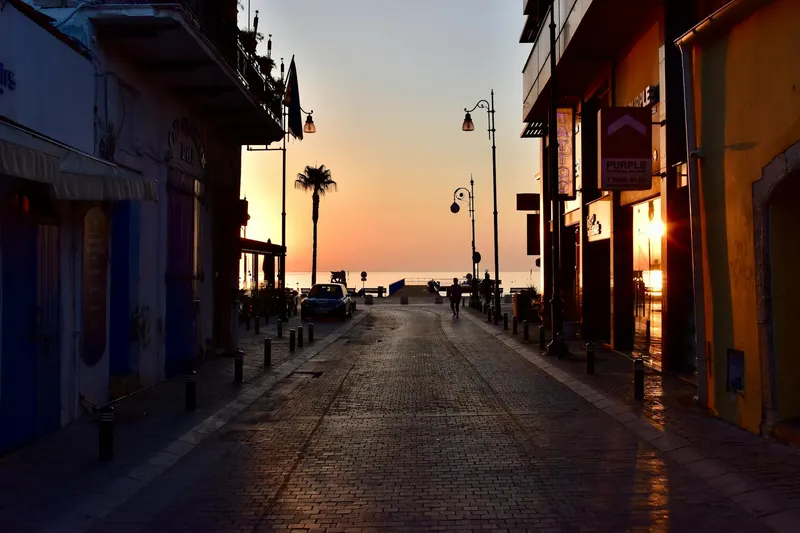
View of Limassol, business capital of Cyprus

Moving to Cyprus

The Mediterranean tax and tech hub

Read the guide
European UnionCurrency: Euro340 days of sunshineNon-Dom 0% dividendsLimassol / Nicosia-25% vs Paris

Factsheet: Cyprus

Cyprus is the third-largest island in the Mediterranean, an EU member since 2004 and a Eurozone member since 2008. With only 1.2 million inhabitants and a history intimately linked to Great Britain, English is a quasi-official language used in business, law and daily life. For entrepreneurs, investors or high-income individuals looking to optimize their taxation within the EU while enjoying a sunny Mediterranean lifestyle, Cyprus represents one of the most attractive destinations in Europe today, driven by its Non-Domiciled regime and one of the continent's most competitive corporate tax rates.

🇨🇾
Cyprus
The Mediterranean tax and tech hub
Capital
Nicosia (Limassol = business capital)
Official language
Greek + English (quasi-official, very widespread)
Currency
Euro (€)
Population
~1.2 million
Timezone
UTC+2 (UTC+3 in summer)
🇪🇺 European Union
Yes, since 2004
Digital nomad visa
No, EU free movement
Cost of living (vs Paris)
~20 to 25% cheaper

Why choose Cyprus?

Cyprus combines exceptionally rare advantages in Europe: EU membership, among the most favorable taxation on the continent for entrepreneurs, English everywhere, guaranteed sunshine and a cost of living still below Paris. All within a stable legal framework based on British law. Here are the six reasons Cyprus deserves serious consideration.

🇬🇧
English quasi-official
Direct British heritage: laws, contracts, administration, daily life are conducted in English. No language barrier for English-speaking French expats.
💼
Non-Domiciled regime (Non-Dom)
0% on dividends and capital income for up to 17 years. The ideal structure for any entrepreneur paying themselves dividends from their company.
🏢
Corporate tax 12.5% + IP Box at 2.5%
One of the lowest corporate tax rates in the EU. Income from qualifying intellectual property (software, patents) benefits from an effective corporate tax of just 2.5%.
🇪🇺
European legal security
British-inspired corporate law + European framework. Strong investor protection, single market access, full freedom of movement for EU citizens.
☀️
340 days of sunshine per year
The sunniest country in the European Union. Crystal-clear Mediterranean sea, beaches, Levantine gastronomy — incomparable Mediterranean quality of life within the EU.
🌐
Financial and tech hub
Limassol, nicknamed 'Limassolwood', hosts more than 12,000 foreign companies. Hub for iGaming, fintech, crypto and tech with a full ecosystem of English-speaking service providers.

Visa & Residence

As a French citizen, and therefore a European citizen, you benefit from free movement without any visa procedure to enter and settle in Cyprus. After three months of stay, a simple registration procedure suffices. Formalities are among the lightest in the EU, and the entire process is conducted in English.

EU free movement — MEU1 registration

After three months of residency, you must register with the Civil Registry and Migration Department (CRMD) by filing the MEU1 form. This declaration is a simple administrative formality: there is no quota, no language test, no resource requirement for EU citizens. The form can be filed at any CRMD office on the island. The residence card is issued within two to four weeks.

Duration
Permanent (5 years residency → permanent)
Min. income
Timeline
2 to 4 weeks
Target
~60 EUR

Cypriot tax residency: the 60-day rule

To benefit from the Non-Dom regime and Cypriot taxation, you must become a tax resident of Cyprus. The classic rule is spending more than 183 days per year on the island. A so-called '60-day' rule has also existed since 2017: it allows obtaining Cypriot tax residency by spending only 60 days in Cyprus, provided you are not tax resident in any other country and have an economic link with the island (company, employment). This also requires ending your French tax residency by declaring your departure to the French tax administration.

Recommendation: The tax transition from France to Cyprus requires guidance from an accountant or tax lawyer specialist. The stakes are significant (exit tax on latent capital gains, Franco-Cypriot tax treaty, proof of effective residency). Plan this process well before your move.

Cost of living

Cyprus is generally 20 to 25% cheaper than Paris, but gaps vary significantly by city. Limassol, the business hub highly sought by Israeli, Russian and French expats, has seen its rents increase notably in recent years. Paphos and Larnaca remain significantly more affordable. In all cases, a car is virtually essential: public transport is inadequate.

Estimated monthly budget: 1,500 - 2,500 EUR/month (Limassol)

Expense Monthly amount
1 bed apartment, central Limassol 800 - 1,300 EUR
1 bed apartment, Paphos / Larnaca 550 - 900 EUR
Groceries 200 - 350 EUR
Restaurants (meze 15-25 EUR, mid-range 20-35 EUR) 100 - 200 EUR
Transport (car virtually mandatory) 100 - 200 EUR
Fiber internet (100-300 Mbps) 25 - 45 EUR
Private supplementary health insurance 60 - 150 EUR

📊 Taxation

Taxation is THE primary reason Cyprus attracts so many entrepreneurs and investors. The island offers a unique combination in Europe: legal security of an EU member state, British-inspired corporate law and some of the continent's most competitive taxation.

Non-Domiciled regime (Non-Dom)
0% on dividends, interest, mobile capital gains and capital gains (excluding Cypriot real estate) for up to 17 years. Open to French nationals who have spent fewer than 17 of the last 20 years in Cyprus.
Corporate tax (CIT)
12.5% flat on profits, one of the lowest rates in the EU. Corporate tax + Non-Dom dividends = only 12.5% total burden.
IP Box — 2.5% effective corporate tax
80% of the taxable base is exempt for qualifying intellectual property income (software, patents, algorithms). Effective corporate tax of just 2.5%, the reference structure for software publishers.
Income tax (IT)
Progressive brackets: 0% up to 19,600 EUR, 20% from 19,601 to 28,000 EUR, 25% from 28,001 to 36,300 EUR, 30% from 36,301 to 60,000 EUR, 35% above. NHS (GESY): additional 2.65%.
France-Cyprus tax treaty (1981)
Double taxation avoided. The ideal structure for software publishers (IP Box 2.5%), holdings (0% intra-group dividends), entrepreneurs paying themselves dividends (12.5% corporate tax + 0% div = 12.5% total).

🚀 For entrepreneurs

Cyprus has established itself as one of the preferred destinations for European entrepreneurs, particularly in the tech, fintech, iGaming, crypto and software sectors. Limassol's ecosystem, sometimes nicknamed 'Limassolwood', hosts more than 12,000 registered foreign companies and has a dense network of lawyers, accountants and English-speaking service providers specializing in foreign companies.

Private Limited Company (Ltd)
Formation in 5 to 10 business days, minimum capital 1 EUR, registration with Companies House Cyprus (Registrar of Companies). Most common legal form for foreign businesses. Corporate tax 12.5% on profits.
IP Box — 2.5% effective corporate tax
Income from software licenses, patents, qualifying algorithms → 2.5% effective corporate tax. The reference structure for European software publishers and tech companies wishing to remain within the EU framework.
Non-Dom + Ltd: the winning combination
12.5% corporate tax on Ltd profits + 0% on dividends (Non-Dom status) = total tax burden of only 12.5% on distributed profits. Hard to beat in the EU.
iGaming, Fintech and Crypto hub
Cyprus is Europe's main online gaming (iGaming) hub, with licenses issued by the Cyprus Gaming Authority. Fintech and crypto assets are also very active, attracted by an EU regulatory framework and competitive taxation.

❤️ Healthcare

The Cypriot health system meets European standards. Since 2020, the island has implemented the GESY (General Health System), a universal health insurance scheme covering all legal residents, including active EU expats on the island. This system has profoundly transformed access to care.

GESY — Universal social security
Access to care at very reduced rates for all residents (GP consultation: ~1 to 3 EUR). NHS contribution: 2.65% of salary. Comprehensive coverage for registered residents.
Reference private hospitals
American Medical Center (Nicosia and Limassol), Apollonion Private Hospital (Nicosia), Limassol General Hospital. Specialist consultations: 40 to 80 EUR. English-speaking staff everywhere.
Supplementary insurance recommended
Despite the GESY, private supplementary health insurance (60-150 EUR/month) remains recommended for rapid access to the best private specialists without waiting times and with comprehensive international coverage.

Where to live

Cyprus offers several very different environments depending on your profile. Entrepreneurs and professionals will mostly choose Limassol for its dynamism. Families and retirees will prefer Paphos or Nicosia. Beach lovers will opt for Larnaca or Ayia Napa.
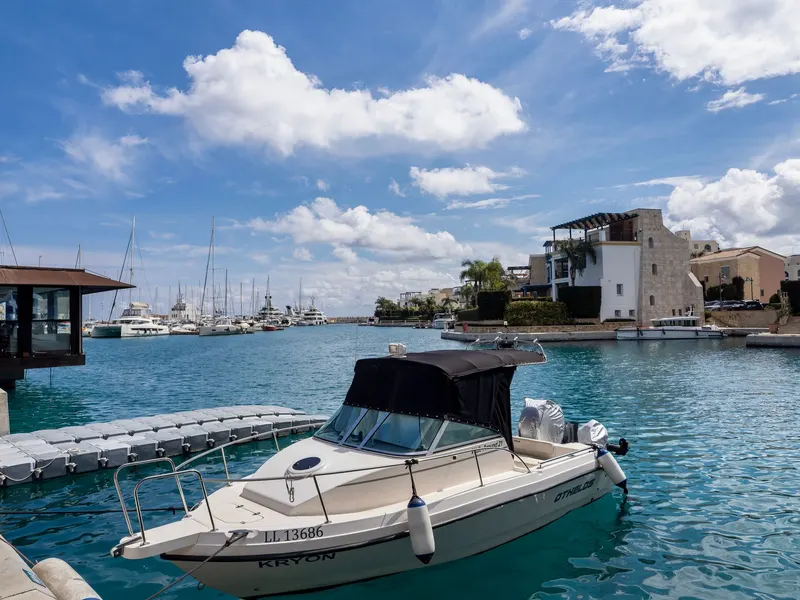
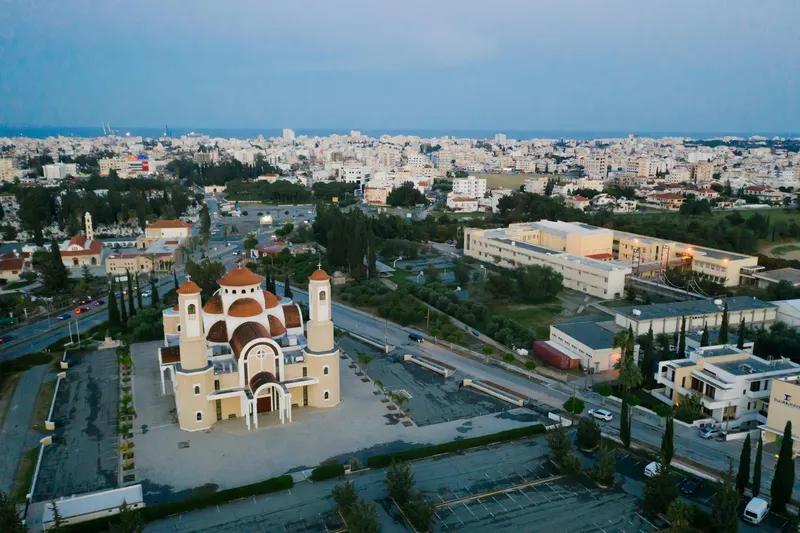
Limassol
Limassol
The business capital. Cosmopolitan business hub, waterfront, strong French and international community. This is where foreign companies, specialized service providers and upscale restaurants concentrate. Tight real estate market. 800-1,300 EUR/month (1 bed).
Best for: Entrepreneurs, fintech, iGaming
Nicosia
Nicosia
The administrative capital. Quieter and cheaper than Limassol, ideal for families and those working with Cypriot authorities. Lively city center with a remarkable walled old town. 600-1,000 EUR/month (1 bed).
Best for: Families, civil servants, retirees
Paphos
Paphos
Quality of life and nature. UNESCO archaeological site, magnificent beaches, Cape Greco. Popular with British retirees and families. Gentler pace of life, less urbanized. 550-900 EUR/month (1 bed).
Best for: Retirees, families, nature lovers
Larnaca
Larnaca
Main international airport, calm and affordable. The city is developing rapidly with new modern neighborhoods. Ideal for frequent travelers. 500-800 EUR/month (1 bed).
Best for: Travelers, nomads, budget

Drawbacks to know

🏠
Tight real estate market in Limassol
Strong foreign demand (Israeli, Russian, French, Ukrainian) has driven Limassol rents skyward. Prices have doubled in ten years in some neighborhoods. Plan for a substantial housing budget or move away from the center.
🗺️
Island divided since 1974
The north of the island has been occupied by Turkey since 1974. The geopolitical situation is frozen. For expats in the south (Republic of Cyprus), the daily impact is limited but reunification remains a sensitive issue.
💸
Not as cheap as low-cost EU destinations
Cyprus is 20-25% cheaper than Paris but remains significantly more expensive than Bulgaria, Romania or Georgia. If your primary objective is minimizing the cost of living, other destinations are more competitive.
🌡️
Extreme summer heat
42 degrees Celsius and above in August in Nicosia. Air conditioning is essential and costly. Virtually nonexistent public transport makes a car mandatory, adding to the monthly budget.
🏦
Economic fragility and 2013 banking crisis
The Cypriot economy is heavily dependent on finance and tourism. In 2013, a severe banking crisis led to a 'bail-in' (levy on deposits above 100,000 EUR). Diversifying your banking assets is strongly recommended.

Frequently asked questions

Does the Cypriot Non-Dom regime apply to French nationals? +
Yes. The Cypriot Non-Domiciled (Non-Dom) regime is open to any individual who is not 'domiciled' in Cyprus, meaning who has spent at least 17 of the last 20 years outside Cyprus. In practice, the vast majority of French nationals settling in Cyprus meet this condition and can benefit from total exemption on dividends, interest and capital gains for 17 years. However, it is imperative to have your situation validated by a tax advisor before making any decisions.
Cyprus vs Malta: which island for my business? +
Both islands are EU members, English-speaking and fiscally attractive, but with different profiles. Cyprus offers a directly applicable 12.5% corporate tax, a 2.5% IP Box and a clear Non-Dom regime. Malta offers a refund system that can bring the effective corporate tax to 5-10% but the process is more complex and administratively heavier. For a software publisher, Cyprus's IP Box is unbeatable. For a pure holding company, the comparison merits a case-by-case analysis.
How do you obtain residency in Cyprus? +
For a French citizen, the procedure is simple: no visa required (EU free movement). After 3 months of stay, you file the MEU1 form with the Civil Registry and Migration Department (CRMD), along with your passport and proof of residence (rental contract or property deed). The residence card is issued within 2 to 4 weeks for a cost of approximately 60 EUR. For permanent residency, you simply need to reside legally for 5 continuous years on the island.
Does the Cypriot IP Box work for software publishers? +
Yes, and that is precisely why Cyprus has become the reference destination for European software publishers. The Cypriot IP Box covers software, algorithms, patents and other qualifying intangible assets. 80% of the taxable base is exempt, bringing the effective corporate tax to 2.5% on this income. The regime complies with OECD standards (nexus approach). It is critical to properly document internal software development (economic substance) to meet compliance requirements.
Is the situation in northern Cyprus a risk for expats? +
For expats settling in the southern part (the internationally recognized Republic of Cyprus, EU member), the geopolitical situation has no practical impact on daily life. The partition line (Green Line in Nicosia) has been stable since 1974 and both zones coexist peacefully. EU nationals can freely cross checkpoints. However, buying real estate in the occupied north is strongly discouraged: property titles are not recognized by the Republic of Cyprus or the EU.

Explore other destinations

Compare with other countries that might suit you.