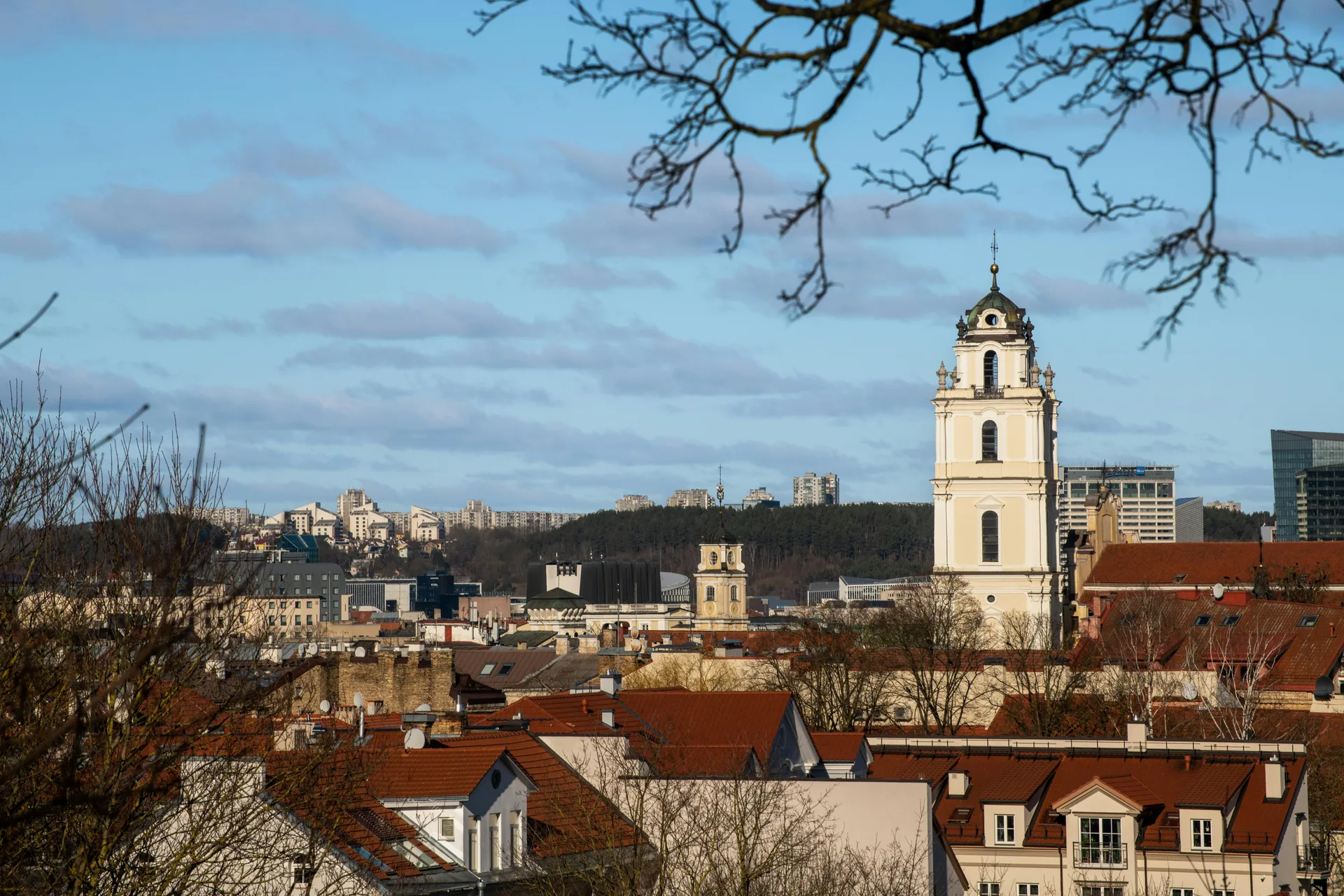
Moving to Lithuania
The most affordable Baltic state, patent freelance and advantageous corporate tax
Read the guideFactsheet: Lithuania
Lithuania is the largest and most populous of the three Baltic states, with nearly 2.8 million inhabitants. An EU member since 2004 and a Eurozone member since 2015, it combines a reliable European legal framework with some of the most competitive taxation on the continent. Its patent freelance system, which allows self-employed individuals to pay a fixed flat contribution of approximately 32 euros per month for income up to 45,000 euros annually, is unique in Europe and constitutes a considerable advantage. Vilnius, its capital, is experiencing a real estate and technology boom, and is now recognized as one of Europe's most active fintech hubs.
Why choose Lithuania?
Lithuania stands out for an exceptional tax profile for freelancers and small entrepreneurs. The patent system, the 5% corporate tax for small structures, and Eurozone membership make it a very serious destination for those wishing to expatriate within Europe while optimizing their tax situation. Vilnius is booming, with a dynamic tech and fintech scene. Here are the six major advantages of Lithuania.
Full freedom of movement for EU citizens, euro currency, full European legal protection. No visa required, no currency risk.
The Lithuanian patent system allows self-employed individuals to pay a very low fixed flat contribution (approximately 32 EUR/month) covering income tax and contributions, for income up to 45,000 EUR annually. Unique in Europe.
Small companies (revenue < 300,000 EUR and fewer than 10 employees) benefit from a reduced corporate tax of only 5%. The standard rate is 15%. Among the lowest in the entire European Union.
Vilnius has become one of Europe's main fintech hubs since Brexit. Numerous European financial companies have established their headquarters there. A fast-growing tech and finance ecosystem.
Rent, food, restaurants and services are significantly cheaper than France, with quality standards close to Western Europe, especially in major cities.
UNESCO-listed Baroque historic center, rich cultural scene, modern neighborhoods in full development. Human-scale city with a strong and growing international community.
Visa & Residence
Lithuania is an EU and Schengen area member. French citizens benefit from free movement and can settle without any visa. After three months, registration with local authorities is recommended to formalize residency and access public services.
EU free movement — No visa required
As a French national, you can enter and settle freely in Lithuania without a visa. After 3 months, you must register with the Migration Department (Migracijos departamentas) to obtain your European residence certificate. This document is required for opening a local bank account, subscribing to services and accessing the public health system. The procedure is simple, free, quota-free and without a language test.
Registration as a European resident
Registration with the Migracijos departamentas allows you to obtain a personal identification number (asmens kodas), essential for many administrative and professional procedures. It is necessary for filing taxes, opening a traditional bank account, forming a company or subscribing to public health insurance.
Permanent residency after 5 years
After 5 years of continuous legal residence in Lithuania, European nationals can apply for a permanent residence card. It simplifies access to public services and strengthens legal stability. No language or income test is required for EU citizens.
Cost of living
Lithuania is one of the cheapest Eurozone countries, with a cost of living 30 to 40% lower than Paris. Vilnius, the capital, is the most expensive city in the country, but remains very affordable by Western European standards. Kaunas and Klaipeda offer even lower rates. The quality-to-price ratio is exceptional, especially for housing, dining and daily services.
Estimated monthly budget: 1,000 - 1,700 EUR/month
📊 Taxation
Lithuania offers a set of particularly attractive tax regimes for freelancers and entrepreneurs. The patent system, where the freelancer pays a fixed flat contribution of around 32 EUR per month for income up to 45,000 EUR annually, has no equivalent in Europe. For companies, the reduced 5% corporate tax for small structures is among the lowest in the EU. The France-Lithuania tax treaty prevents double taxation.
🚀 For entrepreneurs
Lithuania has become one of the most attractive destinations in Central and Baltic Europe for entrepreneurs, especially since Brexit propelled Vilnius as an alternative fintech hub to London. The patent system simplifies life for freelancers, and the 5% corporate tax for small structures is a strong argument for company founders. The startup ecosystem is booming.
❤️ Healthcare
Lithuania has a public health system funded by social contributions (Sodra). Public coverage is accessible to contributing residents, but quality and waiting times vary by specialty. Most expats supplement public coverage with private insurance, very affordable in Lithuania, which provides access to modern clinics and quick consultations without waiting.
Where to live
Lithuania has several cities of interest for expats, with very different atmospheres. Vilnius is the economic, cultural and technological center. Kaunas is the second city, more industrial but undergoing transformation. Klaipeda is the country's only Baltic sea port, pleasant and very affordable.


Drawbacks to know
Like its Baltic neighbors, Lithuania endures cold winters with little daylight. Frequently sub-zero temperatures from November to March. An important climate factor for expats from southern France.
Lithuanian is an ancient Baltic language, considered one of the most archaic in Europe. Very difficult to learn for French speakers. English is fortunately very widespread in Vilnius.
Lithuania has lost more than a quarter of its population since independence in 1990, mainly through emigration to Western Europe. This phenomenon weakens certain service sectors and the pension system.
The public health system suffers from chronic underinvestment, with long waiting times and uneven infrastructure across regions. Private insurance is virtually essential for adequate comfort.
Proximity to Russia, Belarus and the Kaliningrad enclave can generate geopolitical concern. Lithuania is a NATO member, but its geographic position remains a factor to consider.
Lithuanians can be reserved and the language barrier often slows integration. The expat community is growing in Vilnius but remains smaller than in other European capitals.
Frequently asked questions
How does the Lithuanian patent system actually work?
What is the difference between a patent and creating a UAB in Lithuania?
Is Vilnius really an important fintech hub?
How do you become a Lithuanian tax resident?
Is it easy to open a bank account in Lithuania?
Lithuania, Latvia or Estonia: which destination to choose?
Explore other destinations
Compare with other countries that might suit you.